

Your report came back. There’s a number on it, maybe 112, maybe 145, and you’re not sure if that’s fine or something to act on. Or you checked at home with a glucometer and the reading surprised you. Either way, you want a direct answer.
Here are the blood sugar normal ranges at a glance:
- Fasting (before eating): 70 to 99 mg/dL
- Random (any time of day): below 140 mg/dL
- After a meal (2 hours): below 140 mg/dL
- HbA1c (3-month average): below 5.7%
Kamineni Hospital’s Endocrinology and Diabetology team, with 34+ years of experience across Hyderabad and Vijayawada, put this guide together so you can read your diabetes reports clearly and know what to do next.
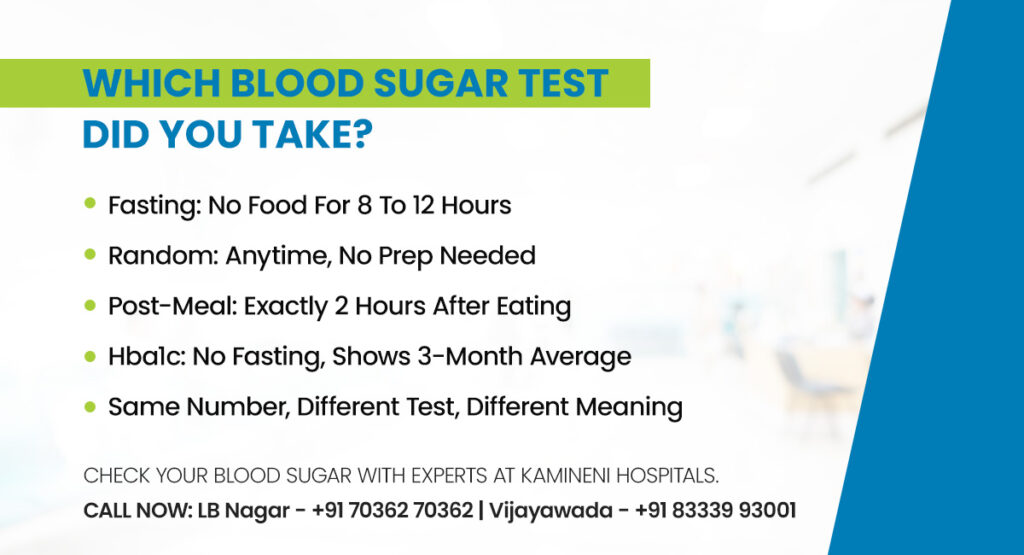
Different Blood Sugar Tests, Different Timings
Check which blood sugar test is named in your report. The same number means something different depending on when the test was done.
Fasting Blood Sugar (FBS)
- When: After 8 to 12 hours without food or drink, except water
- Why: Checks your baseline blood sugar. Standard first screening for diabetes.
Random Blood Sugar (RBS)
- When: Any time of day, no fasting needed
- Why: Used when symptoms like excessive thirst, frequent urination, or sudden fatigue are present.
Postprandial Blood Sugar (PPBS)
- When: Exactly two hours after a meal
- Why: Checks how well your body clears blood sugar after eating.
HbA1c
- When: Any time, no fasting needed
- Why: Shows your average blood sugar over the past two to three months. One meal or one bad day won’t change this result.
Blood Sugar Normal Range: Match Your Number to This Table
All values are in mg/dL, the unit most Indian labs use.
| Test | Normal | Prediabetes | Diabetes |
| Fasting Blood Sugar | 70 to 99 | 100 to 125 | 126 or above |
| Random Blood Sugar | Below 140 | 140 to 199 | 200 or above |
| Postprandial (2 hrs after meal) | Below 140 | 140 to 199 | 200 or above |
| HbA1c | Below 5.7% | 5.7% to 6.4% | 6.5% or above |
Does your report show mmol/L? Divide the mg/dL value by 18 to convert. So 126 mg/dL equals roughly 7.0 mmol/L.
What Does Your Blood Sugar Report Result Actually Mean?
- Normal Range: You’re fine. Retest once a year. If you’re over 40 or have a family history of diabetes, don’t skip it.
- Prediabetes Range: Your blood sugar is above normal but hasn’t crossed into the diabetic zone. Your body is producing insulin but not managing glucose as well as it should. This range is reversible. Diet changes, daily walking, and a specialist review can bring your blood sugar test results back to normal. The ICMR-INDIAB-17 study, published in The Lancet Diabetes and Endocrinology, 2023, found that more than 136 million people in India are living with prediabetes and most haven’t been told. Act now.
- Diabetic Range: One high reading doesn’t confirm diabetes. Doctors need two separate abnormal results before diagnosing, unless symptoms like extreme thirst, unexplained weight loss, or blurred vision are present. Book a follow-up. The IDF Diabetes Atlas 2024, published in The Lancet Diabetes and Endocrinology, reports India has 90 million adults with diabetes, with many cases caught late because people delayed that second test.
“I Feel Fine. Do I Still Need to See a Doctor?”
Yes. Prediabetes and early diabetes don’t cause noticeable symptoms. No pain, no tiredness, nothing on a normal day. That’s what makes a borderline blood sugar test result easy to ignore.
Elevated blood sugar quietly affects your blood vessels and nerves well before any symptom appears. By the time you feel something, some damage has already happened. A single consultation takes 30 minutes. Book your appointment now.
What Can Make Your Reading Look Higher Than It Is?
If your blood sugar test result is borderline, check whether any of these apply to your test day:
- Incomplete fast: Tea with sugar or milk before a fasting test can push your reading up by 20 to 30 mg/dL.
- Illness or fever: Infection causes your body to release hormones that raise blood sugar. A test taken while unwell isn’t reliable.
- Stress: A bad night or emotional stress causes a temporary spike, in both lab tests and glucometer readings.
- Certain medicines: Steroids, some blood pressure medicines, and certain antidepressants raise blood sugar temporarily.
- Random test timing: A reading taken within an hour of a heavy meal won’t reflect your true random level.
If any of these apply, your doctor will ask you to repeat the test. One reading in the wrong conditions isn’t your final blood sugar test result.
Your Number Is a Starting Point. Here Is What to Do Next
A blood sugar report tells you where you are right now, not where you’ll stay. Normal means keep testing. Prediabetes means act before it progresses. A reading in the diabetic range means get a second test and a clear plan from a specialist.
Consult us if any of these apply:
- Fasting blood sugar is 100 mg/dL or above
- Random or postprandial reading is 140 mg/dL or above
- HbA1c is 5.7% or above
- You’re over 35 and haven’t screened in the past year
- A parent or sibling has diabetes
Kamineni Hospital, one of the best hospital in Hyderabad for diabetes and metabolic care, has been treating these conditions for 34+ years. Our Endocrinology and Diabetology specialists at LB Nagar and Vijayawada read your result in the full context of your health and tell you exactly what to do next. Our Diagnostic Services cover all blood sugar tests with same-day results.
Also renowned as the best multispeciality hospital in Hyderabad, call LB Nagar on +91 70362 70362, or Vijayawada on +91 83339 93001 to book your appointment now.
Please note: This content is for general patient education only. It does not replace medical consultation, diagnosis, or treatment advice from a qualified doctor. Please consult a specialist at Kamineni Hospitals for personalised guidance based on your symptoms and medical history.
Frequently Asked Questions
What is the normal blood sugar range for a fasting test?
Between 70 and 99 mg/dL is normal. A reading of 100 to 125 mg/dL is prediabetes. 126 mg/dL or above on two separate tests indicates diabetes.
My fasting report says 112 mg/dL. What does that mean?
112 mg/dL on a fasting test falls in the prediabetes range. It’s not diabetes, but it’s a signal to see a doctor and review your diet and activity.
Can a home glucometer replace a lab blood sugar test?
A glucometer gives a useful indication but isn’t as accurate as a lab test. For any diagnosis or medical decision, a lab fasting test or HbA1c is needed.
I was stressed before my test. Can that change my result?
Yes. Stress raises blood sugar temporarily through cortisol. A reading taken under stress may not reflect your true baseline. Repeat the test on a calm day after a proper fast.
What’s the difference between a fasting blood sugar test and HbA1c?
Fasting blood sugar is a single snapshot after an overnight fast. HbA1c reflects your average blood sugar over two to three months. Doctors use both together for a complete picture.
My random blood sugar is 160 mg/dL. Does that confirm diabetes?
No. A single reading of 160 mg/dL doesn’t confirm a diagnosis. Your doctor will order a fasting test or HbA1c to confirm. Don’t skip that follow-up.