


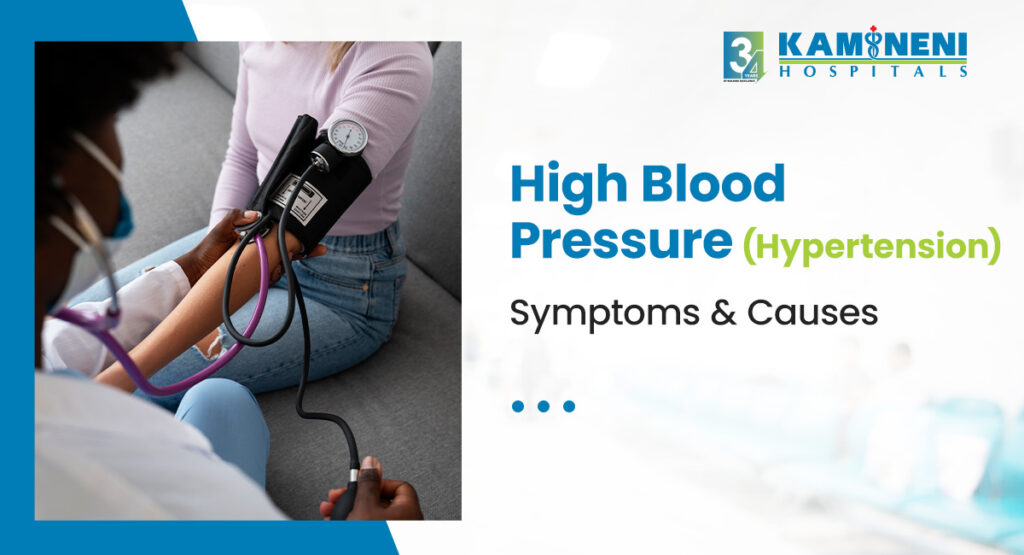
High blood pressure rarely announces itself. No headache, no chest pain, nothing that feels wrong. The arteries stretch quietly and the heart adjusts. Life continues normally while the damage builds inside.
Dr. M.R.M Babu, Senior Consultant Cardiologist at Kamineni Hospitals, LB Nagar, says the absence of high blood pressure symptoms is not reassuring with this condition. It is how the condition works.
Our general medicine and cardiology teams at Kamineni Hospitals, backed by 34+ years of multispeciality care, see this scenario every week.
What Is a Normal Blood Pressure Reading vs a High One?
A reading of 120/80 is the standard reference point for a healthy adult, but blood pressure exists on a spectrum, not a simple normal or abnormal. The top number (systolic pressure)) is the force your heart creates when it beats. The bottom number (diastolic pressure is the force when it rests between beats.
| Category | Reading |
| Normal | Below 120/80 mmHg |
| Elevated | 120 to 129 / below 80 mmHg |
| Stage 1 Hypertension | 130 to 139 / 80 to 89 mmHg |
| Stage 2 Hypertension | 140/90 mmHg or above |
One high reading does not need a diagnosis. Two readings above 140/90 taken on separate visits usually lead to multi speciality hospital in LB Nagar.
Why Does High Blood Pressure Have No Symptoms?
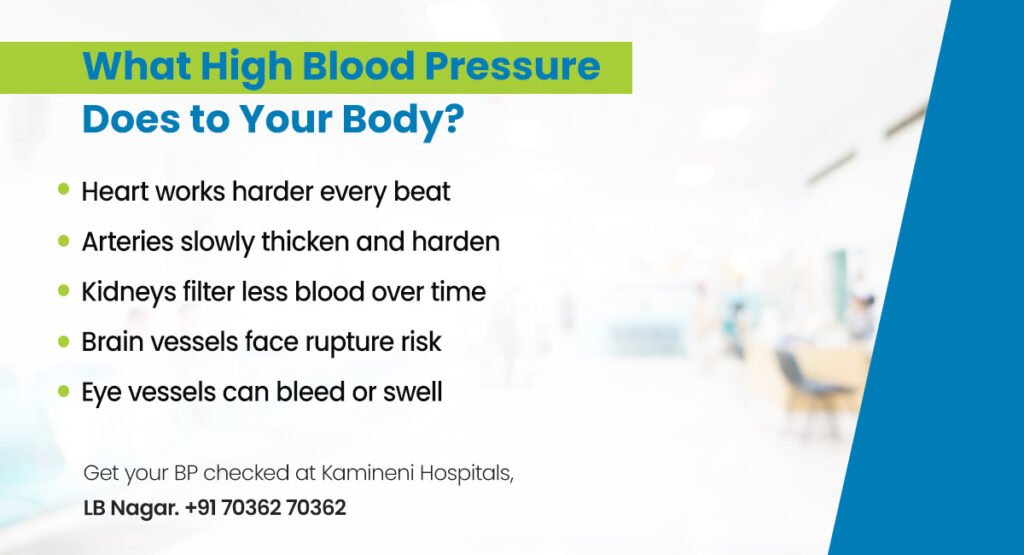
Our body is very good at adapting to slow changes. When pressure rises gradually over months or years, the artery walls stretch and thicken to accommodate it. No pain signal fires. The heart works harder with each beat but does not complain about it.
Tiny vessels in the kidneys, brain and eyes face constant excess pressure but nothing feels different from the outside. This quiet, symptom-free progression is exactly why hypertension is called a silent killer.
High blood pressure symptoms only appear when pressure has been dangerously elevated for a long time, or when it spikes suddenly. At that point the body does start signalling:
- A severe headache that does not ease with rest or paracetamol
- Blurred or double vision
- Chest tightness or pain
- Breathlessness without physical effort
- Nosebleed with no obvious cause
- Sudden dizziness or loss of balance
If you have any combination of these alongside a high BP reading, do not wait for a scheduled appointment, this needs same-day attention.
What Causes High Blood Pressure?
Primary hypertension causes, sometimes called essential hypertension, builds up over years with no one root cause. According to the National Health Portal of India, it accounts for 90 to 95% of adult hypertension cases. While secondary hypertension has a direct cause. It often appears faster and at higher levels than the primary kind.
Primary Hypertension Factors:
- Age
- Family history
- Years of high salt intake
- Low physical activity
- Long-term stress
- Smoking and regular alcohol use
It is the slow accumulation across a decade or more that eventually tips the reading over the threshold.
Secondary Hypertension Conditions:
- Chronic kidney disease
- Thyroid disorders
- Sleep apnea
- Certain medications including some pain relievers, contraceptive pills
The useful thing about secondary hypertension is that treating the underlying cause often brings BP down meaningfully. This is why an accurate diagnosis matters more than just starting medication.
What Are the Risk Factors for Hypertension in India?
The combination of desk-based work, long commutes, high-salt food, irregular meals and sustained work pressure creates exactly the conditions where hypertension develops quietly through a person’s 30s and 40s.
According to the WHO, blood pressure of 140/90 mmHg or above is prevalent in a significant proportion of Indian urban adults, with rates rising steadily over the past two decades. The risk factors most relevant includes:
- High salt intake year after year
- Little to no physical activity during the working week
- Excess weight, which forces the heart to push blood through more tissue
- Diabetes, which stiffens and narrows blood vessels over time
- Chronic stress that keeps the cardiovascular system running at elevated output
- Smoking, which narrows arteries both immediately and over time
- Regular alcohol consumption
These risk factors feel completely normal. There is no moment where something feels wrong. You are not ill. You are just living. That is precisely the window in which hypertension develops undetected for years.
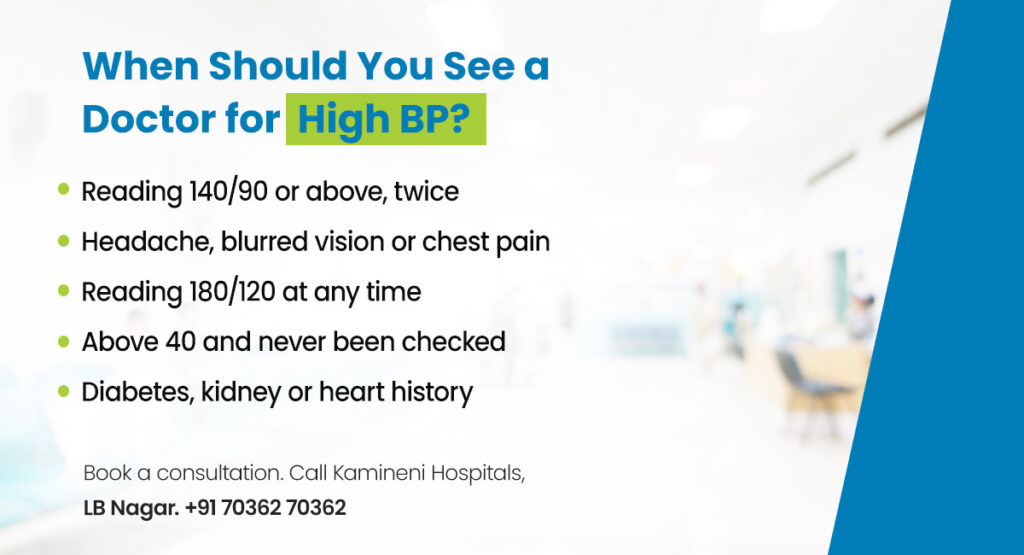
When Should You See a Doctor for High Blood Pressure?
Two readings above 140/90 on separate visits means evaluation is needed from the best hospital in LB Nagar.
| See a Doctor Now If | You Can Monitor at Home If |
| Reading 140/90 or above on two visits | One mildly elevated reading, no prior history |
| Reading 180/120 or above at any time | Reading between 120 to 129 / below 80 mmHg |
| Headache, blurred vision or chest pain present | Under 40, no risk factors, doctor has reviewed |
| You have diabetes, kidney disease or heart disease | Lifestyle changes started, follow-up booked |
| Pregnant with a high reading | Doctor has confirmed home monitoring is right for you |
| Above 40 and BP never checked before | Readings clearly improving over recent weeks |
For patients in LB Nagar, Dilsukhnagar, Nagole and Hayathnagar, our General Medicine and Cardiology departments at Kamineni Hospitals, LB Nagar are available for same-day consultations and planned assessments. Patients from Abids, Hyderguda and Himayatnagar can reach the same team at Kamineni Hospitals, King Koti.
Book a Consultation at Kamineni Hospitals, LB Nagar
Hypertension treatment is not just a tablet. It starts with understanding what is actually driving your numbers, whether the kidneys are involved, what your heart rhythm shows on an ECG and where your blood sugar sits. A BP reading without that full picture leaves most of the question unanswered.
At Kamineni Hospitals, one of the best multispeciality hospital in Hyderabad, offer general medicine specialists and cardiology team access with Nephrology available in-house.
ECG, blood tests and kidney function all panels run without referral delays. As a Hyderabad multispeciality hospital network covering LB Nagar, King Koti and Vijayawada, we do not hand you a number and send you home. We explain what it means for your specific health and what the right next step looks like.
If you have a reading you have been sitting on, this is the right time to act on it. Call Kamineni Hospitals, to book a consultation: +91 70362 70362
Frequently Asked Questions
1. What is a dangerous blood pressure reading?
180/120 mmHg or above is a hypertensive crisis and needs emergency care right away. A reading of 140/90 or above across two separate visits is Stage 2 hypertension and also needs medical evaluation.
2. Can stress alone cause hypertension?
Acute stress pushes BP up temporarily, then it usually settles. Chronic stress sustained over months and years is a genuine contributing factor, particularly when it combines with poor sleep, little exercise and a high-salt diet. Stress alone rarely produces sustained hypertension, but it makes it significantly harder to bring under control once it develops.
3. Is high blood pressure curable?
Primary hypertension is managed rather than cured. With the right lifestyle changes and medication where needed, most people maintain healthy BP levels for the long term. Secondary hypertension can sometimes resolve fully when the condition driving it is successfully treated.
4. What tests does a doctor run for high blood pressure?
A standard assessment includes BP readings across two or more visits, blood tests covering kidney function and blood sugar, a urine test to check for protein, and an ECG to look at heart rhythm and load. Further tests follow based on what the initial results suggest.
5. Can young people get high blood pressure?
A nationally representative study published in PLOS Medicine found 12% of Indian adults aged 18 to 25 already had raised blood pressure. Obesity, excess salt, family history and low activity all contribute to younger adults. Regular BP checks make sense well before the age of 40 if any of these risk factors apply.