


Most people panic when their nose starts bleeding. The good news: nearly 90% of nosebleeds are minor. They come from blood vessels right at the front of the nose and stop within ten minutes with the right technique.
When blood drains down the throat instead of coming out the front, or when it won’t stop, it needs a doctor.
At Kamineni Hospitals, our ENT team has been treating nosebleeds for over 34 years. NABH-accredited facilities in Hyderabad and Vijayawada, same specialist from first look to final treatment.
Read on to know the nose bleeding symptoms, what causes such recurrent bleeds, and how to stop it from coming back.
Is This a Serious Nosebleed or Can It Wait?
Blood coming out one nostril that you can see and control is almost always minor. It’s the kind that happens after nose picking, a bump, dry air, or a cold. Pinch the soft part of the nose firmly for ten minutes and it stops.
A back-of-nose bleed is different. The blood drains down the throat instead of coming out the front. You taste it. You keep swallowing. You may feel sick. This type is more common in adults over 50 and needs same-day medical attention.
Go to The Hospital If:
- Bleeding hasn’t stopped after 20 minutes of correct technique
- Blood drains down the throat
- Dizziness, fainting, or you’re losing a lot of blood
- Bleeding from both nostrils at once
- Nosebleed followed a head injury
- Blood in vomit or black stools
What Do You Do Right Now? Nose Bleeding Treatment at Home
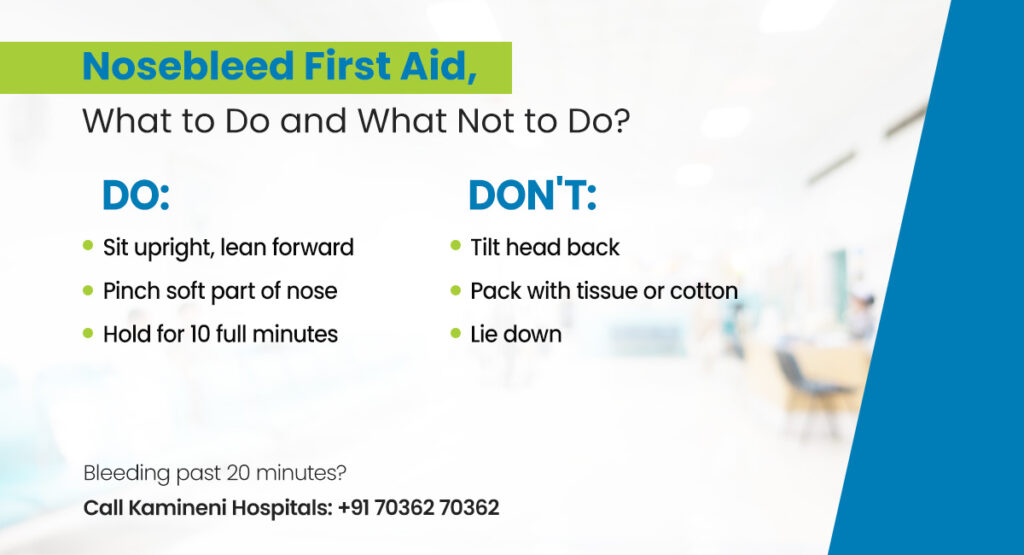
Nose bleeding treatment starts with one mistake most people make: pinching the bridge of the nose. The bridge is the hard bony part at the top. It does nothing. The blood vessels are lower, in the soft part just above the nostrils. Pinch there instead. Hold firmly for ten full minutes. Don’t let go early to check. That’s what pulls the clot away.
Breathe through the mouth the whole time. Lean slightly forward so blood drains out, not back into the throat. A cold cloth on the back of the neck helps some people. Don’t tilt the head back: swallowed blood causes vomiting. Don’t pack the nose with dry tissue or cotton. It sticks to the clot and tears it off when you remove it. Don’t blow the nose to clear the clot.
If it’s still going after 20 to 30 minutes of this, visit the best ENT doctor in Vijayawada. That’s the point where a doctor needs to look.
Why Does Your Nose Keep Bleeding? The Main Nose Bleeding Causes
The most common reason noses bleed is dry air. It dries the nasal lining out until a tiny blood vessel near the surface breaks. Locally, the usual nose bleeding causes are :
- Nose picking (most common in children)
- A cold or sinus infection
- Allergies
- And dry air from air conditioning or winter heating.
Two causes that often get missed: High blood pressure and medication. High blood pressure doesn’t cause nosebleeds on its own. But if your blood pressure is high and your nose bleeds for any reason, it’ll bleed longer and harder. Certain medicines also do the same thing. Aspirin, ibuprofen, warfarin, and some supplements like fish oil and vitamin E all slow down clotting.
An ENT specialist in Hyderabad finds this with a quick camera examination. Don’t spend another month treating it as dryness when it might be something structural.
How to Stop Nosebleeds From Coming Back?
Nose bleeding prevention comes down to keeping the nasal lining moist and dealing with whatever is making it dry or fragile.
- Saline nasal spray two to three times a day keeps the inside of the nose from drying out.
- A thin layer of Vaseline applied with a cotton bud to the inside of each nostril at night works even better.
- A bedroom humidifier helps children especially, particularly in winter or in air-conditioned rooms.
- If you have high blood pressure, getting it under control won’t stop bleeds from starting, but they’ll stop much faster when they do.
- If you’re on aspirin, ibuprofen, or fish oil, speak to your doctor about whether the dose needs reviewing.
Visit Kamineni Hospitals the Best ENT Hospital Near Me in Hyderabad
Most nosebleeds don’t need a doctor. The ones that keep coming back or won’t stop have a cause. Finding it takes one visit to Kamineni Hospitals.
At Kamineni Hospitals, the best ENT hospital in Hyderabad, Telangana and Vijayawada our team uses nasal endoscopy to find the exact source. Same-day assessment. The same specialist who identifies the cause manages the treatment from that point.
Searching for the best ENT hospital near me, call +91 70362 70362 directly.
This content is for general patient education only. It does not replace medical consultation, diagnosis, or treatment advice from a qualified specialist. Please consult a specialist at Kamineni Hospitals for personalised guidance based on your medical history, test results, and treatment requirements.
Frequently Asked Questions
When should I go to the hospital for a nosebleed?
If it hasn’t stopped after 20 to 30 minutes of sitting upright, leaning forward, and pinching the soft part of the nose without releasing. Also come in if blood is draining down the throat, if there’s dizziness, or if the bleed followed a head injury.
Why do I keep getting nosebleeds for no reason?
Recurrent nosebleeds usually have a cause that hasn’t been found yet. The most common are dry nasal lining, a deviated septum causing one-sided dryness, medicines that slow clotting, uncontrolled blood pressure, or a nasal polyp. If bleeds always come from the same side, a camera examination of the inside of the nose is the right next step.
Can high blood pressure cause nosebleeds?
Not directly. High blood pressure doesn’t rupture nasal vessels on its own. But if blood pressure is uncontrolled, any bleed takes longer to stop because the pressure in the vessels makes clots harder to form and hold.
What Does a Back-of-Nose Bleed Feel Like?
Blood drains down the throat rather than coming out the nostril. You taste it, keep swallowing, and may feel sick or vomit if enough builds up. There’s often very little visible blood at the front of the nose. Back-of-nose bleeds are more common in adults over 50 and need same-day ENT attention.