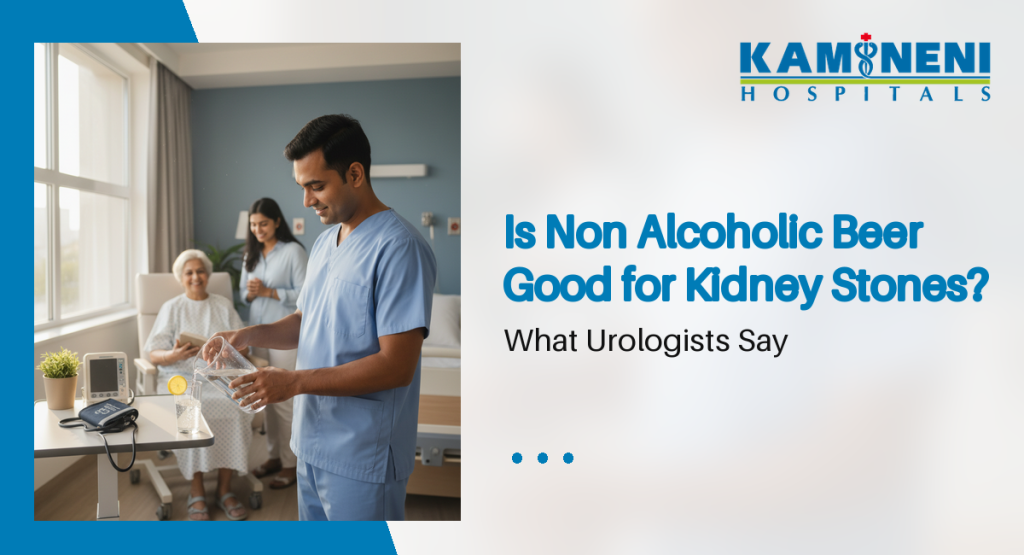
Is non alcoholic beer good for kidney stones? You may have heard that beer helps flush stones, or that switching to non-alcoholic beer keeps the benefit without the harm. The truth is simpler and less reassuring: no type of beer, alcoholic or not, is recommended for kidney stone prevention or treatment. At Kamineni Hospitals, our nephrology and urology teams see patients who delayed real care because they believed this myth. With 34+ years of specialist-led care and NABH accreditation, we explain what actually protects your kidneys and why beer, even without alcohol, is not the answer. Read on to understand the science and what to do instead.
Key takeaways
- Non-alcoholic beer still contains oxalates and purines that contribute to kidney stone formation.
- Alcohol-free beer does not hydrate effectively and may still increase dehydration risk.
- Medical guidelines recommend water and dietary changes, not any beer, for stone prevention.
- Lemon water and high fluid intake are proven, safe alternatives to help prevent stones.
What makes non-alcoholic beer different from regular beer for kidney health?
Non-alcoholic beer removes most of the alcohol, but it keeps the barley, hops, and yeast. These ingredients contain oxalates and purines, two compounds that raise the risk of calcium oxalate and uric acid stones. The National Institutes of Health analysis of NHANES data found that beer and wine intake correlated with lower stone prevalence, but this does not mean beer treats or prevents stones. The study measured population patterns, not individual outcomes. For you, the oxalate load in non-alcoholic beer remains a concern.
Your kidneys filter waste. When urine becomes concentrated, minerals crystallise. Non-alcoholic beer does not provide the sustained, stone-reducing hydration that plain water does. It also lacks the citrate that lemon water offers, which binds calcium and inhibits crystal growth.
- Oxalate content: barley and malt contribute to calcium oxalate stone risk.
- Purine load: yeast byproducts increase uric acid, raising uric acid stone risk.
- Dehydration effect: even without alcohol, beer acts as a diuretic and can leave you net negative on fluids.
- No citrate benefit: unlike lemon water, beer does not alkalinise urine or inhibit crystal formation.
If you are experiencing symptoms of kidney stones, Urology specialists at Kamineni Hospitals can evaluate your stone type and recommend targeted prevention.
Does non-alcoholic beer help pass kidney stones faster?
No. There is no evidence that non-alcoholic beer speeds stone passage. The myth likely stems from alcohol’s mild diuretic effect, which temporarily increases urine output. However, diuresis without adequate fluid replacement leaves you dehydrated. Dehydration concentrates urine and can worsen stone formation or passage.
Stone passage depends on size, location, and ureter width. Small stones, under 5 millimetres, often pass with hydration and pain management. Larger stones may require Advanced Laser Treatment for Kidney Stones – Welcome to Kamineni Hospitals or other intervention. No beverage, including non-alcoholic beer, dissolves stones or reliably moves them.
| Approach | Effect on Stone Passage | Risk or Limitation |
|---|---|---|
| High water intake | Increases urine volume, may help small stones pass | None for most patients |
| Non-alcoholic beer | No proven benefit | Oxalates, purines, dehydration risk |
| Lemon water | Citrate inhibits crystal growth | None for most patients |
| Medical expulsive therapy | Relaxes ureter, aids passage | Requires prescription, side effects possible |
For persistent pain or obstruction, Kidney Stone treatment at Kamineni Hospitals includes minimally invasive options.
What do kidney specialists recommend instead of beer for stone prevention?
Kidney specialists recommend daily fluid intake sufficient to produce 2 to 2.5 litres of urine. Water is first-line. Lemon water adds citrate, which binds calcium and reduces stone risk. Dietary changes, not beverages, form the foundation of prevention.
Your nephrologist at Nephrology will tailor advice to your stone type. Calcium oxalate stones, the most common, require limiting high-oxalate foods and maintaining normal calcium intake. Uric acid stones need lower purine intake and sometimes urine alkalinisation.
- Fluid target: 2.5 to 3 litres of water daily for most adults.
- Citrate source: lemon or lime juice in water, not sugary substitutes.
- Sodium limit: keep below 2,300 milligrams daily to reduce calcium excretion.
- Calcium intake: maintain 1,000 to 1,200 milligrams daily from food, not supplements alone.
Patients searching for kidney stone hospital in Hyderabad can access comprehensive metabolic evaluation at Kamineni Hospitals.
Why do some studies link beer to lower kidney stone risk?
Observational studies, including NHANES data published by the National Institutes of Health, found that beer and wine drinkers had lower odds of kidney stones than non-drinkers. Beer-only drinkers showed a 24 percent reduction, wine-only drinkers 25 percent. However, these are population associations, not treatment recommendations.
Correlation does not equal causation. Beer drinkers in these studies may have had different diets, activity levels, or genetics. More importantly, the studies included alcoholic beer, not non-alcoholic versions, and still did not recommend beer for stone prevention. The dehydration and metabolic risks outweigh any theoretical benefit for individual patients.
| Study Finding | What It Actually Means | Why It Does Not Apply to You |
|---|---|---|
| Beer drinkers had 24% lower stone odds | Population pattern, not individual protection | Your stone type, diet, and hydration matter more |
| Fluid intake reduces stone risk | Water works; beer is not special | Beer adds oxalates and purines water does not |
| Alcohol has diuretic effect | Short-term urine increase | Net dehydration worsens stone risk |
For advanced cases, Kidney Transplant vs Dialysis: Which is the Better Option? explores long-term options when kidney function declines.
When should you see a urologist for kidney stone symptoms?
See a urologist if you have severe flank pain, blood in urine, fever with stone symptoms, or recurrent stones. These signs suggest obstruction, infection, or a metabolic disorder needing evaluation. Delaying care because you hoped beer would help can lead to complications, including kidney damage.
At Kamineni Hospitals, diagnosis starts with imaging, urine analysis, and blood tests chosen from your symptoms and history. Our Kidneys Stones Management protocols follow NABH standards. If stones are large or obstructing, Advanced Laser Treatment for Kidney Stones – Welcome to Kamineni Hospitals offers precise fragmentation with faster recovery than open surgery.
- Severe pain: uncontrolled by over-the-counter medication.
- Fever: indicates possible infected obstruction, a medical emergency.
- Recurrent stones: suggests underlying metabolic abnormality.
- Single kidney or reduced function: higher stakes, earlier intervention.
Call +91 70362 70362 for emergency or appointment. Do not drive yourself if pain is severe.
Is non alcoholic beer good for kidney stones compared to other drinks?
No. Compared to water, lemon water, or even moderate coffee, non-alcoholic beer offers no kidney stone benefit and carries real drawbacks. The table below compares common beverages on factors that matter for stone formers.
| Beverage | Stone Risk Impact | Why |
|---|---|---|
| Water | Lowers risk | Dilutes urine, no added oxalates or purines |
| Lemon water | Lowers risk | Citrate binds calcium, inhibits crystals |
| Non-alcoholic beer | May raise risk | Oxalates, purines, poor hydration |
| Sugar-sweetened soda | Raises risk | Fructose increases calcium and uric acid excretion |
Your best strategy is simple: drink mostly water, add lemon if you like, and limit high-oxalate and high-purine foods. For personalised guidance, Nephrology at Kamineni Hospitals provides metabolic stone evaluation.
Non-alcoholic beer is not good for kidney stones. It contains oxalates and purines that raise stone risk, and it does not hydrate effectively. Water and lemon water are safer, proven choices. If you have symptoms or recurrent stones, see a specialist. Call Kamineni Hospitals at +91 70362 70362 to book a nephrology or urology consultation.
FAQs
Can non-alcoholic beer dissolve kidney stones?
No. No type of beer dissolves kidney stones. Stones require medical management, increased fluid intake, or procedures like laser fragmentation depending on size and location.
Is non-alcoholic beer better than water for kidney stones?
No. Water is superior for kidney stone prevention because it dilutes urine without adding oxalates, purines, or calories. Non-alcoholic beer offers no advantage and may increase risk.
Why do people think beer helps kidney stones?
The myth comes from alcohol's mild diuretic effect, which temporarily increases urine output. However, this leads to net dehydration and concentrated urine, which worsens stone formation and does not help passage.
What is the best drink to prevent kidney stones?
Water is first-line. Lemon water adds citrate, which inhibits calcium crystal formation. These are the only drinks with strong evidence for stone prevention.
Should I completely avoid non-alcoholic beer if I have had kidney stones?
Occasional consumption is unlikely to cause a stone alone, but it should not be considered a prevention strategy. Discuss your specific risk factors with a nephrologist.
When is kidney stone pain an emergency?
Seek emergency care if you have fever with stone symptoms, uncontrolled pain, vomiting, or only one functioning kidney. These may indicate infection or obstruction requiring urgent treatment.