




Heat forces the heart to pump harder to cool the body. At the same time, the kidneys work overtime to manage fluid loss. When both organs are already weak, that extra load can push the body into a crisis fast.
That’s what makes summer dangerous for heart and kidney patients. Kamineni Hospitals cardiology and nephrology teams assess these cases together. In-house heart scans, renal Doppler and kidney function tests mean nothing gets missed and no time is lost to referrals.
This blog explains what high temperatures do to a compromised heart, why kidney patients face high temperatures and kidney disease morbidity risk, and what to do before peak heat arrives.
What High Temperatures Do to a Heart That’s Already Under Strain?
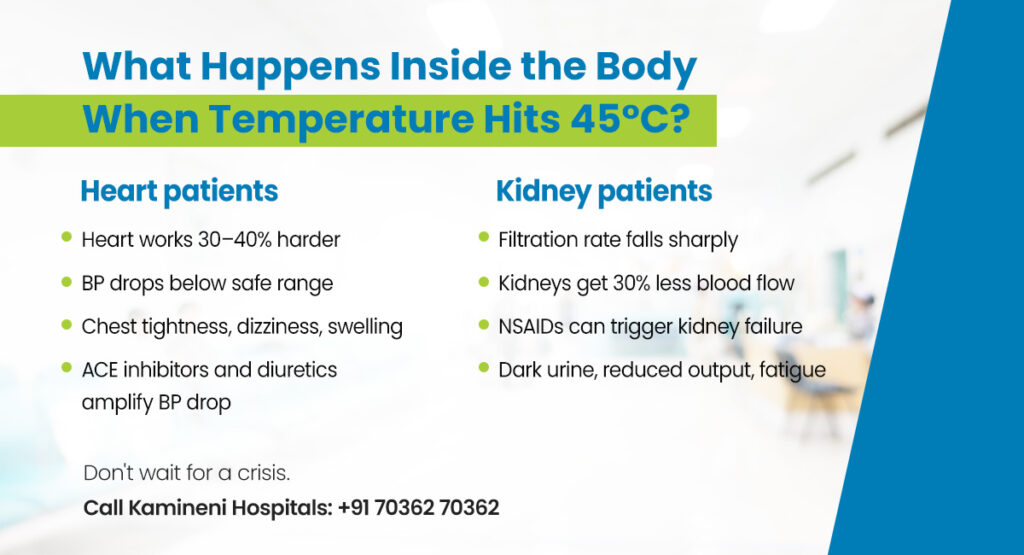
When it gets hot, your body pushes extra blood to the skin to release heat, which drops blood pressure inside the body. According to the American Heart Association, the heart works 30 to 40% harder in extreme heat just to keep normal circulation going. For a healthy heart that’s tiring but manageable. For a damaged one, it often isn’t.
In a heart with existing damage blood pressure drops further. The patient feels dizzy, breathless, or notices the chest tightening.
If you take heart medications in summer, the heat changes how they work. High temperatures and kidney disease morbidity are closely linked to this medication risk.
- ACE inhibitors and ARBs
- Calcium channel blockers
- Diuretics
All three already lower blood pressure or reduce fluid. Heat does the same thing on top of them. The drop becomes dangerous, sometimes quickly.
Symptoms A Heart Patient Must Not Ignore In Summer:
- Chest tightness or pressure
- Fast, irregular heartbeat
- Sudden dizziness on standing
- Ankle or leg swelling
- Breathlessness from mild activity
What Does Summer Heat Do to Kidneys Already Dealing With CKD?
In a patient with chronic kidney disease (CKD), summer heat can trigger acute kidney injury in just a few hours. This happens because the kidneys need a steady blood supply to filter waste, manage fluid, and control blood pressure. Heat cuts that supply by diverting blood to the skin instead.
Kidney Care UK found roughly a 30% increase in hospital admissions for kidney-related conditions during heat events. India’s own 2024 heat wave sent over 40,000 people to hospital between April and June.
Kidney heat symptoms that need same-day attention:
- Dark or reduced urine
- Face or ankle swelling
- Unusual tiredness
- Nausea without cause
- Lower back or side pain
If you have CKD and any of these appear in summer, get a creatinine check the same day. Don’t manage it at home; visit the best kidney hospital in Hyderabad.
Kidney disease and heat intolerance go together precisely because the kidneys have already lost some of their ability to adjust. So don’t manage these signs at home.
Why Heart and Kidney Patients Face Bigger Risk Together?
Heart and kidney patients face the biggest risk in summer because these two organs are directly linked. When the heart pumps less blood, the kidneys receive less flow and begin to fail. When the kidneys can’t clear fluid, blood pressure rises and the heart is forced to work even harder. Heat hits both at once.
This is why patients with both conditions face the highest summer risk. Three things every heart and kidney patient should do before peak summer:
- Check your fluid target with your doctor: 2.5 to 3 litres daily is the right amount for most patients. But heart failure and advanced kidney disease patients may be on fluid restriction.
- Review your medication list: ACE inhibitors, ARBs, diuretics, and calcium channel blockers all behave differently in summer heat. Your specialist can adjust doses or timing before the heat peaks.
- Avoid outdoor exposure from 11am to 4pm during peak months: Not a suggestion. A clinical recommendation.
Get Your Heart and Kidney Check Before Peak Summer at Kamineni Hospitals.
Heart and kidney patients don’t get a warning when the heat tips them into trouble. By the time those signs feel serious, the body has already been under stress for hours.
A pre-summer check at Kamineni Hospitals takes less than a day and tells you exactly where your heart and kidney function stands before the heat peaks. One of the best heart hospital in Hyderabad for integrated cardiac and renal care, our cardiology and kidney specialists teams review the same patient together. One visit covers heart function, kidney function, medication review, fluid status, and baseline creatinine and cardiac markers before the heat peaks.
Both our LB Nagar and Vijayawada units offer same-day diagnostics: heart scans, renal Doppler, BNP panels, and full kidney function tests, all in one visit.
Searching for a heart hospital near me or the best hospital for kidney treatment in Hyderabad,
Call +91 70362 70362 to book your pre-summer cardiac and renal assessment.
Frequently Asked Questions
How does heat affect heart patients specifically?
Heat forces the heart to work 30 to 40% harder just to keep normal circulation going while also cooling the body. For patients with heart failure, coronary artery disease, or arrhythmia, that extra load can trigger decompensation. Blood pressure medications including diuretics and ACE inhibitors compound the risk.
What are the warning signs of heat stress in kidney patients?
Significantly reduced urine output, dark yellow or orange urine, worsening swelling in the ankles or face, fatigue that’s worse than your usual baseline, nausea without infection, or pain in the lower back or sides. Any of these during peak summer in a CKD patient needs a same-day creatinine check.
Can NSAIDs cause kidney failure in summer?
Yes. NSAIDs reduce blood flow to the kidneys even in normal conditions. In a dehydrated CKD patient during peak summer heat, they can trigger acute kidney injury within one to two doses. Paracetamol is the safer alternative. If you’re unsure, speak to a doctor before taking anything.
How much water should heart and kidney patients drink in Hyderabad during summer?
This depends on the condition. Most patients without restrictions should target 2.5 to 3 litres daily. But heart failure patients and those with advanced CKD are often on fluid restriction. Increasing intake without checking first can make things worse, not better. Ask your specialist at your next visit, or before summer arrives.