


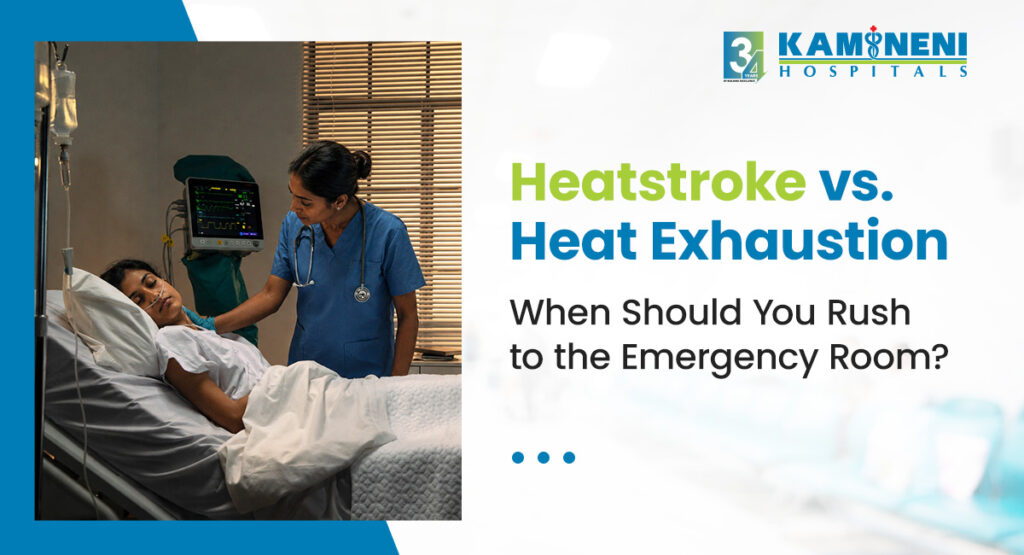
Heat exhaustion and heatstroke are both caused by overheating. But heat exhaustion keeps the person alert and sweating so it can be managed at home with the right steps. Heatstroke crosses 40°C body temperature and the person becomes confused or collapses. Emergency care is needed immediately.
This guide by specialists at Kamineni Hospitals with over 34 years of experience help you spot the heatstroke vs. heat exhaustion difference, check the right warning signs, and know exactly when heat-related illnesses demand an emergency room.
The Difference Between Heat Exhaustion and Heatstroke
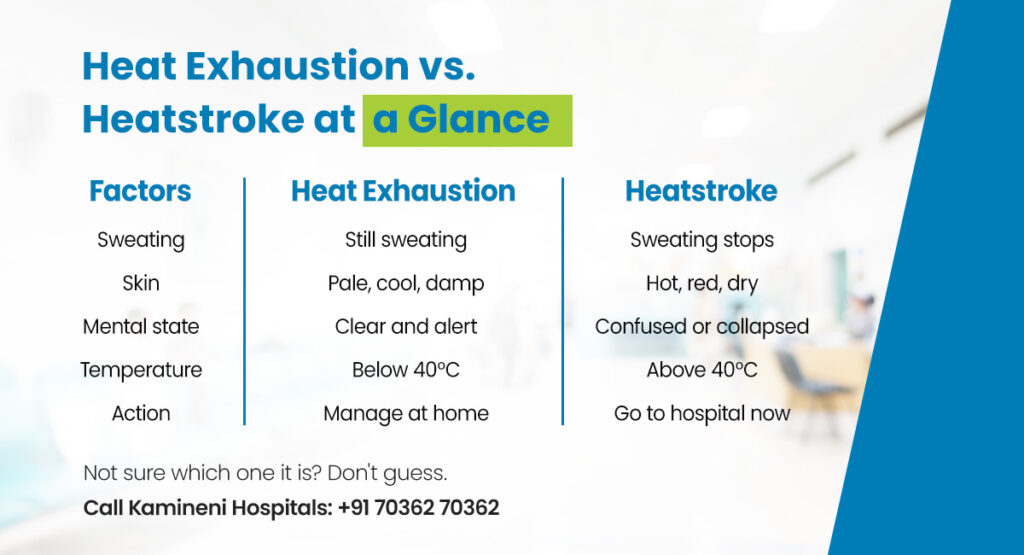
Heat exhaustion happens when the body loses too much water and salt through sweating. The person feels very unwell but stays mentally clear. Body temperature stays below 40°C. And it can be managed at home if caught early.
Heatstroke is different. Body temperature rises above 40°C and keeps climbing. The brain starts to overheat. The person becomes confused, may collapse, or may have a seizure. This is a medical emergency. It cannot be managed at home.
Heat Exhaustion: Signs to Look For and What to Do at Home
According to the WHO, heat exhaustion is one of the most common heat-related illnesses during summer months, particularly in cities with temperatures exceeding 40°C. Hyderabad regularly crosses 44°C between April and June.
Signs of heat exhaustion:
- Heavy sweating
- Skin that is pale, cool and damp
- Dizziness or feeling close to fainting
- Nausea or vomiting
- Muscle cramps, especially in the legs
- Headache and weakness
- Body temperature below 40°C
What to do in the first 30 minutes?
- Move them to shade or air conditioning.
- Lay them flat with legs slightly raised.
- Apply cool wet cloths to the neck and armpits.
- Give small sips of water or an electrolyte drink if they’re alert and not vomiting.
- Fan them continuously.
- Check every 10 minutes.
If they’re clearly improving, stay the course. If they’re not improving after 30 minutes, stop home treatment and go to hospital immediately.
Improvement means: sweating continues, skin stays cool and damp, they feel less dizzy, and they remain mentally clear throughout.
Heatstroke Is a Medical Emergency
Heatstroke doesn’t always follow heat exhaustion. It can arrive without warning especially in elderly people, young children, and anyone taking diuretics or antihistamines.
According to a study published in The Lancet, heatstroke treated within the first hour rarely causes permanent damage. Delayed treatment especially when body temperature stays above 40°C for an extended period can cause permanent brain damage, kidney failure, or liver injury.
Signs of heatstroke:
- Skin is hot, red and dry
- Sweating has stopped
- Body temperature above 40°C
- Confusion
- Slurred speech or saying things that don’t make sense
- Aggressive or unusual behaviour
- Seizure
- Loss of consciousness
If you see any of these signs stop. Don’t wait. Go to the emergency room at the multi speciality hospital near me, now.
What to do while travelling to hospital?
- Move them to the coolest available space.
- Remove excess clothing.
- Apply ice packs or cold wet cloths to the neck and armpits.
- Fan them continuously.
- Do not give water if they’re confused or unconscious.
- Do not leave them alone.
When Should You Go to the Emergency Room?
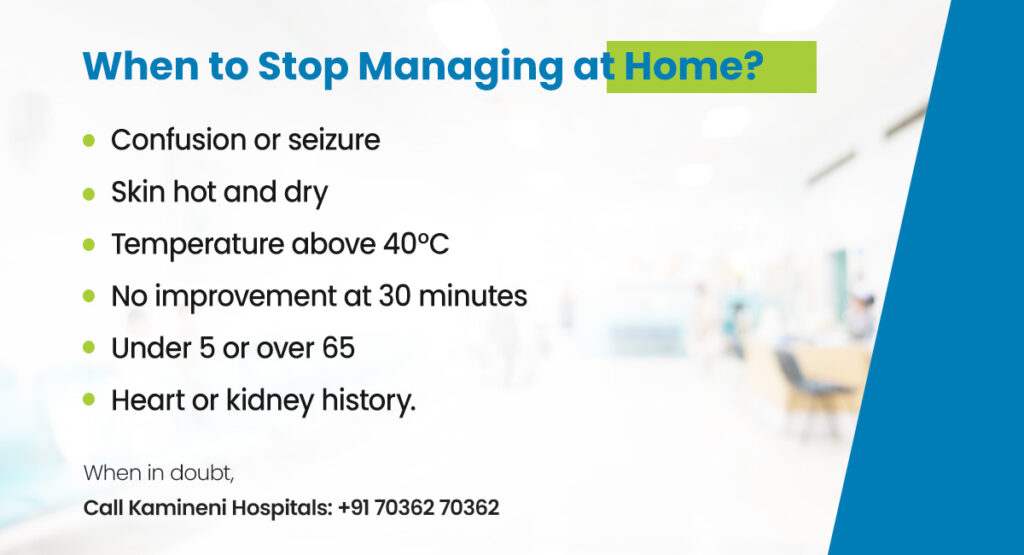
Go to hospital immediately if any of these apply:
| Sign | What It Means |
| Person is confused or not making sense | Brain is overheating |
| Seizure or collapse | Emergency level event |
| Skin is hot, red and dry | Cooling system has failed |
| Temperature above 40°C | Clinical threshold crossed |
| Vomiting prevents fluid intake | Dehydration accelerating |
| Under 5 or over 65 years old | High-risk age group |
| Heart disease, kidney disease or diabetes | Organs under compounded stress |
| On diuretics, beta blockers or antihistamines | Medication affects heat regulation |
| No improvement after 30 minutes of cooling | Heat exhaustion not resolving |
Early care at the multi speciality hospital in vijayawada never causes harm. Delayed care sometimes does.
Heatstroke Needs a Hospital That’s Ready Before You Arrive. Visit Kamineni Hospitals for Immediate Assistance!
Most heat emergencies in Hyderabad happen between 12pm and 4pm during peak summer. The families who arrive early make a fast decision based on clear signs.
When heatstroke arrives at Kamineni Hospitals, cooling starts before paperwork. Ice packs at the major vessel points, IV fluids, and cooling blankets begin immediately. Blood tests for kidney function, liver enzymes, electrolyte levels and clotting profile run at the same time because heatstroke stresses multiple organs simultaneously.
A neurologist and internal medicine specialist assess together. No waiting for one department to finish before the next begins.
Kamineni Hospitals holds NABH accreditation across all three locations and has managed heat-related emergencies across 34+ years of multispeciality practice in Hyderabad.
We are rated 4.8 on Google across locations. Patients consistently note fast emergency response, clear communication, and specialist availability.
Call +91 70362 70362. Or walk in. The team is ready.
Frequently Asked Questions
What Is the Main Difference Between Heatstroke and Heat Exhaustion?
Heat exhaustion means the person is sweating, mentally clear, pale and clammy, with body temperature below 40°C. Heatstroke means temperature above 40°C, sweating has stopped, and the person is confused or has collapsed. Heat exhaustion can be managed at home for 30 minutes. Heatstroke needs emergency care immediately.
Can Heat Exhaustion Become Heatstroke Without Warning?
Yes. Untreated heat exhaustion can progress to heatstroke in minutes. High-risk groups include elderly people, young children, and those on diuretics or antihistamines. If symptoms aren’t clearly improving within 30 minutes of home cooling, treat it as heatstroke and go to hospital.
What Is the Best Heat Exhaustion Treatment at Home?
Move to a cool area immediately. Lay flat with legs slightly raised. Apply cool wet cloths to the neck and armpits. Give small sips of water if the person is alert and not vomiting. Fan continuously. Check every 10 minutes. If clearly improving within 30 minutes, continue to rest. If not, go to the hospital.
How Serious Is Heatstroke Recovery?
It depends entirely on how fast treatment began. According to The Lancet, heatstroke treated within the first hour rarely causes permanent damage. Delayed treatment when body temperature stays above 40°C for an extended period can cause permanent neurological damage, kidney failure, or liver injury. Speed of treatment is the single biggest factor in recovery.