


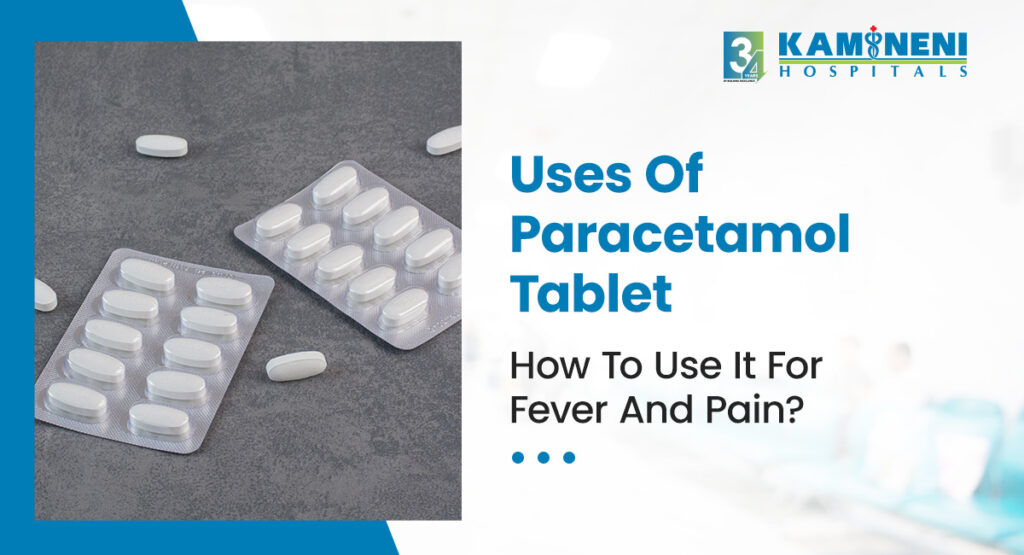
Fever hits at night. The temperature climbs. Someone reaches for paracetamol because that’s what’s in the medicine drawer, and it’s what the family has always used.
Most of the time it helps. But the dose, the strength, the timing, and when to stop self-medicating is still not clear.
Paracetamol reduces fever and relieves mild to moderate pain. Safe when used correctly. The risks come from taking too much, taking it alongside other medicines that already contain it, or continuing when the underlying cause needs a doctor.
Our General Medicine team at Kamineni Hospitals has seen all of these situations in 34+ years of multispeciality care. And here is a guide by our experts on what everyone using paracetamol at home should know.
What Is Paracetamol Used For?
Used correctly, paracetamol reduces fever and relieves mild to moderate pain working on the part of the brain that controls body temperature and pain signals, without irritating the stomach the way ibuprofen can.
- For fever: Viral infections, flu, dengue, post-vaccination reactions. Paracetamol brings the temperature down temporarily while the body fights the illness.
- For pain: Headache, toothache, muscle ache, period pain, back pain, sore throat.
What Paracetamol Does Not Do:
- Doesn’t treat the cause of fever, only brings the temperature down temporarily
- Doesn’t reduce inflammation the way ibuprofen does
- Doesn’t kill bacteria or viruses
- Doesn’t speed up recovery
What Is the Correct Dose of Paracetamol for Adults and Children?
Correct uses of paracetamol tablet depends on dosing based on age and body weight and the gap between doses matters as much as the dose itself.
| Who | Standard Dose | Maximum Per Day | Gap Between Doses |
| Adults and teens (50kg+) | 500mg to 1000mg | 4000mg | At least 4 hours |
| Adults with liver issues or alcohol use | 500mg | 2000mg | At least 6 hours |
| Children 6–12 years | 250mg to 500mg | Based on weight | At least 4 hours |
| Children under 6 | Weight-based — see syrup label | As per label | At least 4 hours |
500mg Vs 650mg Vs 1000mg: Which Paracetamol Dose To Take:
Three strengths are sold in Indian pharmacies.
- 500mg (Crocin, Dolo 500) : Standard adult dose; two tablets = 1000mg is the maximum single dose.
- 650mg (Dolo 650) : Widely used in India; don’t take two at the same time
- 1000mg : The maximum for one dose; only for adults over 50kg; wait at least 6 hours before the next dose.
How Do You Use Paracetamol Safely?
Paracetamol is safe when the dose is right, the gap between doses is maintained, and no other medicine in the house already contains it.
-
- Take with or without food. It doesn’t irritate the stomach, no need to eat before taking it.
- Wait at least 4 hours between doses. Four hours is what keeps the total daily intake within safe limits.
- Check everything else being taken. Combination cold tablets, flu syrups, and multi-symptom sachets already contain paracetamol. Taking a Dolo 650 on top of any of these means the body is getting more than it should .
Brands/Medicines That Already Contain Paracetamol:
- Crocin Cold & Flu
- Combiflu
- Sinarest
- D’Cold
- Sumo Cold
If any of these are being taken don’t add a separate paracetamol tablet on top.
For children : Aspirin in children carries a risk of a serious condition called Reye’s syndrome. For children, the syrup at the correct weight-based dose is the safe choice for fever and pain.
When Should You Stop Using Paracetamol and See a Doctor?
Paracetamol can lower fever and ease pain but it can also delay proper evaluation at a best multispeciality hospital in LB Nagar, if the illness behind it is getting worse.
Stop Self-Managing & See A Doctor If:
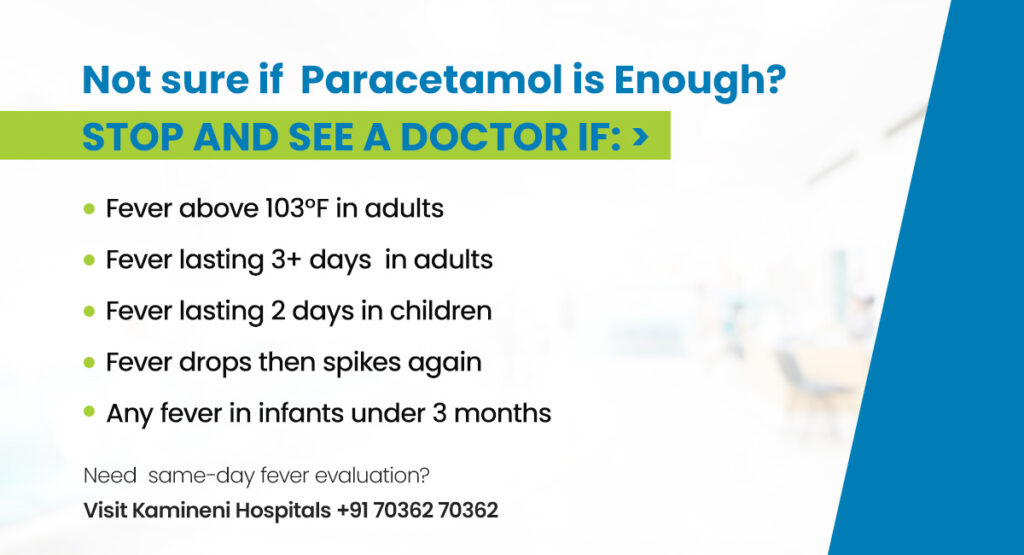
- Fever above 103°F (39.5°C) in adults
- Any fever in infants under 3 months
- Fever lasting more than 3 days in adults or 2 days in children
- Fever comes down with paracetamol then spikes back, it means the underlying illness needs evaluation
- Pain that’s getting worse rather than better
- New symptoms appearing: rash, breathlessness, vomiting, confusion, or severe weakness
In Dengue Especially:
Fever that briefly responds to paracetamol then returns alongside body ache, pain behind the eyes, and fatigue needs blood tests. Not more paracetamol.
At Kamineni Hospitals our General Medicine department provides same-day fever evaluation, blood tests, clinical assessment, and specialist review when needed.
When Paracetamol Isn’t Enough, Kamineni Hospitals Is Here.
Paracetamol works. Used correctly, it’s one of the safest medicines available at home. But problems come from the wrong dose, too-frequent doses, or taking it alongside other medicines that already contain it.
When fever keeps returning or pain keeps worsening, that’s the body asking for more than paracetamol. Visit Kamineni Hospitals, one of the best multispeciality hospital in Hyderabad. Call +91 70362 70362 and book a consultation.
Disclaimer: This content is for general patient education only. Paracetamol dosage, safety, and suitability depend on individual health conditions, weight, age, and other medicines being taken. It does not replace medical consultation or advice from a qualified doctor or pharmacist. Please consult a specialist at Kamineni Hospitals for personalised guidance.
Frequently Asked Questions
Can I take paracetamol on an empty stomach?
Yes it won’t upset the stomach the way ibuprofen does. Food before taking it isn’t necessary. Eat something light if it makes you more comfortable, but it’s not required.
Can I take paracetamol and ibuprofen together?
Usually yes they work through different pathways and don’t clash. In dengue though, skip ibuprofen completely. Only paracetamol is safe when dengue is suspected.
What happens if I accidentally take too much paracetamol?
Liver damage and it stays silent for 24 to 48 hours. Don’t wait to feel unwell. Get to a hospital straight away. The earlier, the better.
How long does paracetamol take to work for fever?
Usually within 30 to 60 minutes. If fever hasn’t shifted after 2 hours, or drops then comes straight back that’s the illness talking, not the medicine failing.