


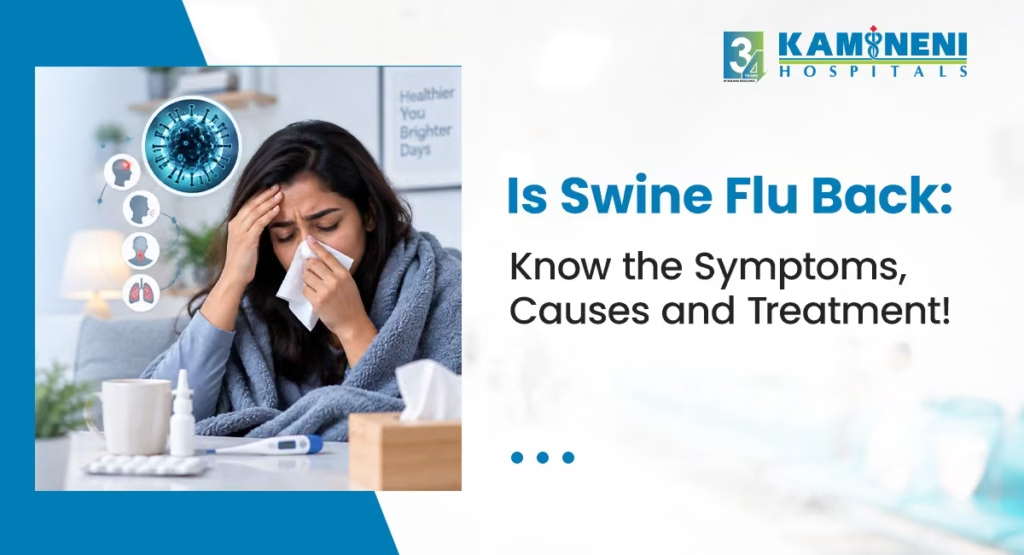
Swine flu made headlines in 2009, spreading across the world and filling Indian hospitals for months. Now, in 2026, cases are climbing again, and if you’ve had a fever, cough, or body ache this season, you’re probably wondering whether history is repeating.
The short answer: Yes, H1N1 is circulating, but the virus has settled into a seasonal illness now, not the pandemic-level threat it once was. Recognising swine flu symptoms early still matters, since the right care at the right time keeps most cases mild.
Kamineni Hospitals has treated flu-like illness through every season since 1991, including the years when H1N1 first became a national concern, with on-site testing and antiviral treatment available when needed. Read on for the symptoms, the causes, and the treatment that works.
What Are the Symptoms of Swine Flu (H1N1)?
Swine flu symptoms feel a lot like ordinary flu. A sudden fever, a cough, and a sore throat are the classic signs. Body aches, a headache, and tiredness usually follow close behind. Speed sets swine flu apart from a cold. Swine flu symptoms show up one to four days after exposure. They arrive all at once, not gradually.
Common Swine Flu Symptoms in Adults
- High fever, often 38°C to 40°C
- Dry, nagging cough
- Sore throat
- Headache and body aches
- Chills and tiredness
- Sometimes nausea, vomiting or diarrhoea
Swine Flu Symptoms in Children
Children get the same symptoms as adults, though a few signs need faster attention. Watch for:
- Fast or laboured breathing
- A bluish tinge to the skin or lips
- Not drinking enough fluids
- Being unusually hard to wake or talk to
- Extreme irritability alongside fever
What Are the Causes of Swine Flu?
Swine flu causes come down to one thing: a flu virus called H1N1. The virus passes from person to person. Eating pork or touching pigs doesn’t spread swine flu.
How Swine Flu Spreads?
A cough, a sneeze, or even talking can send the virus into the air. You can breathe droplets in directly. You can also pick up the virus from a surface, then touch your nose or mouth. Crowded schools, offices, and buses make spreading easier. That’s why cases often cluster around these places.
Why It’s Called “Swine” Flu?
H1N1 is a strain of flu first found in humans in 2009. The strain carries gene segments from pig, bird, and human flu viruses. That mix is where the name comes from. Swine flu has nothing to do with eating pork or being near pigs. The 2009 strain caused an estimated 284,000 deaths worldwide in its first year, according to WHO estimates. The strain later settled into the seasonal flu we see today.
Why Cases Rise During Monsoon and Winter?
Humidity, indoor crowding, and schools reopening after monsoon breaks all help the virus spread. Weather is one of the swine flu causes that repeats almost every year in Hyderabad. Fever Hospital in Nallakunta, Hyderabad, saw around 500 outpatients a day in August 2026. Flu-like cases rose across the city that month, according to local health reporting. Doctors there pointed to the same pattern most years: damp weather and poor indoor airflow.
Swine Flu vs Common Cold: How to Tell the Difference
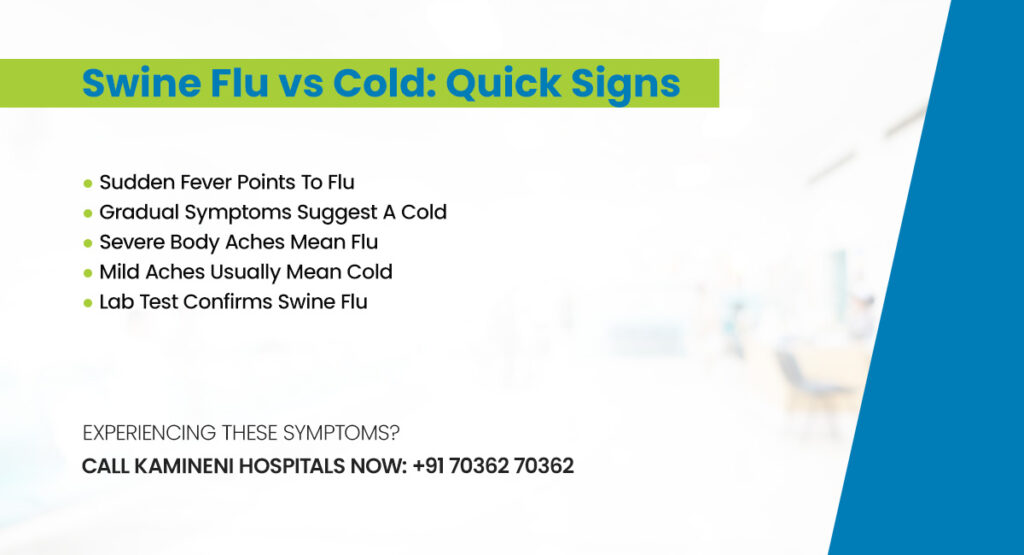
Signs alone can’t confirm swine flu. Swine flu looks almost identical to seasonal flu. Comparing symptoms can still help you spot an ordinary cold. A cold feels different from true flu.
| What to Check | Common Cold | Flu (Seasonal or Swine) |
| Onset | Builds up over days | Comes on suddenly |
| Fever | Rare, or mild | Common, often high |
| Body aches | Mild | Often severe |
| Typical duration | 3 to 7 days | 5 to 7 days, sometimes longer |
| Confirming the cause | Not usually needed | A lab test |
What Is the Treatment for Swine Flu?
Swine flu treatment starts simple: rest, fluids, and medicine for fever and pain. Doctors add antivirals for people at higher risk, or with worse signs.
Antiviral Treatment
Oseltamivir is a medicine that fights the flu virus, including H1N1. This medicine forms the core of swine flu treatment for high-risk patients. Starting Oseltamivir within 48 hours of the first symptom works best. Doctors still prescribe the medicine later for high-risk or severe cases. Your doctor decides whether you need Oseltamivir, and for how long.
Home Care and Recovery
Rest and fluids do most of the work in mild cases. Most people feel better within a week. A lingering cough or tiredness can hang around a bit longer. Paracetamol can help with fever and aches. Always check with a doctor before you mix medicines.
When Should You See a Doctor for Swine Flu?
See a doctor if your fever lasts more than three days. Also see one if breathing feels hard at any point. Mild signs that improve day by day usually don’t need emergency care. Don’t ignore the warning signs below, though.
Red-Flag Symptoms That Need Immediate Care
- Difficulty breathing or breathlessness
- Chest pain or pressure
- Bluish lips or face
- A high fever that won’t break after three days
- Sudden dizziness, confusion, or drowsiness
- Very little urination or signs of dehydration
When To See A Doctor
- Fever lasting three-plus days
- Breathlessness or chest pain
- Bluish lips or face
- Confusion or drowsiness
- Very little urination
Kamineni Hospitals, Best Multispeciality Hospital in Hyderabad
Who Is at Higher Risk of Swine Flu?
Some people face a higher risk of complications: children under five, adults over 65, pregnant women, and people with asthma or diabetes. Heart disease, kidney disease, liver disease, and a weak immune system raise the risk too. Anyone in these groups shouldn’t wait out the symptoms at home. See a doctor early instead.
How to Lower Your Risk of Catching Swine Flu?
A few simple habits cut the risk of catching or spreading swine flu. Wash your hands often, for at least 20 seconds. Use a hand sanitiser when soap isn’t around. Cover your mouth and nose with a tissue or your elbow when you cough or sneeze. Don’t use your hand. Avoid crowded, poorly ventilated spaces when local cases are high. The annual flu vaccine also lowers your risk, so ask your doctor about it each season.
Experiencing Swine Flu Symptoms? Book Your Checkups With Experts at Kamineni Hospitals
Kamineni Hospitals has been treating patients in Hyderabad since 1991, well before H1N1 first emerged, and has continued through every flu season since. Fever, cough, or body aches that don’t ease up within a few days are worth getting checked, not guessed at.
Kamineni Hospitals’ General Medicine and Emergency Care teams offer on-site testing and antiviral treatment, so you don’t get sent elsewhere for a diagnosis or the right care. Backed by Kamineni Hospitals’ 34+ years of multispeciality care and the Best Multispeciality Hospital, South Region award, it’s part of why the hospital comes up as the best hospital in Hyderabad and the best multispeciality hospital in Hyderabad.
Book your checkup with our experts now. Call +91 70362 70362 or book an appointment.
This content is for general patient education only. It does not replace medical consultation, diagnosis, or treatment advice from a qualified general physician or doctor. Please consult a specialist at Kamineni Hospitals for personalised guidance based on your symptoms and medical history.
Frequently Asked Questions
Is swine flu contagious?
Yes, swine flu spreads easily between people through coughing, sneezing, and close contact. People stay contagious for about a week after symptoms start.
How long does swine flu usually last?
Most people recover within five to seven days with rest and fluids. A lingering cough or tiredness can last a little longer.
Can a vaccine prevent swine flu?
The annual flu vaccine covers H1N1 and is recommended for most people above six months old, especially those at higher risk.
Is swine flu the same as COVID-19?
No, they’re caused by different viruses, though signs often overlap. A lab test is the only reliable way to tell them apart.
When should I get tested for swine flu?
Get tested if your fever and flu symptoms don’t improve after two to three days, or if you’re in a higher-risk group.