


Your blood report says your haemoglobin is low. Or you’ve been feeling tired, breathless and pale for weeks and suspect that’s why. You’re here for food answers, so let’s get straight to them.
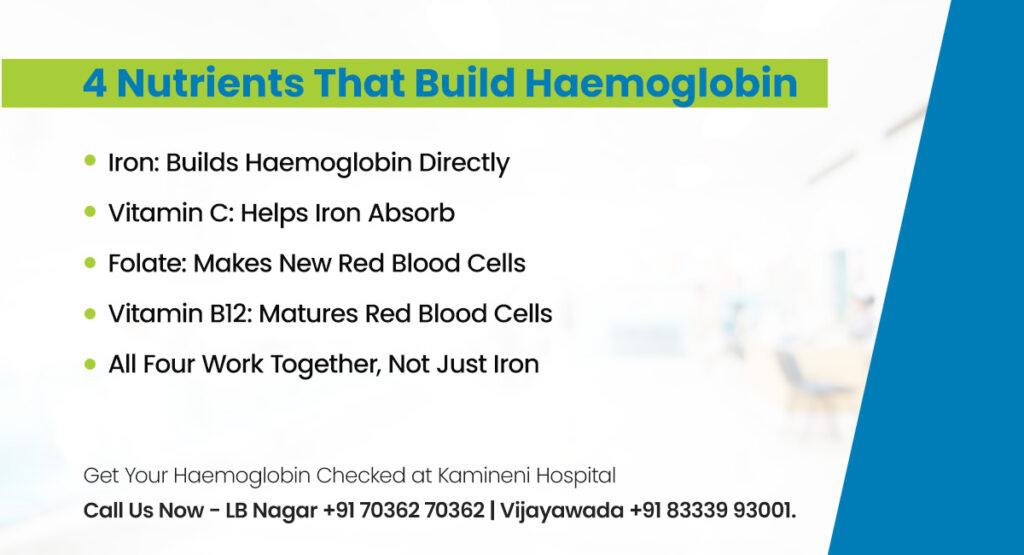
Most people start eating more spinach or drinking beetroot juice. Their haemoglobin doesn’t move much. The reason is simple. Iron alone isn’t enough. Your body needs four nutrients to produce haemoglobin: iron, Vitamin C, folate and Vitamin B12. Skip any one of them and your levels stay stuck.
Kamineni Hospital, rated as the best hospital in hyderabad, nutrition and haematology team with 34+ years of experience across Hyderabad and Vijayawada, put this guide together for exactly this situation. It tells you which foods to eat, how to pair them, and which daily habits are blocking your progress without you knowing.
The Four Nutrients Your Body Needs to Make Haemoglobin
Your body can’t make haemoglobin from iron alone. It needs all four of these nutrients working at the same time.
- Iron, the Core Building Block
Without iron, your body can’t produce haemoglobin at all. Good Indian sources: chicken liver, rajma (kidney beans), horse gram (kulthi dal).
- Vitamin C, the Absorption Helper
Vitamin C converts iron into a form your gut can take in. Without it at your meal, most of the iron from plant foods passes through your body unused. Good Indian sources: amla (Indian gooseberry), guava, raw tomato.
- Folate (Vitamin B9), the Red Cell Maker
Folate makes new red blood cells. Without enough folate, you carry less haemoglobin even when your iron intake looks fine. Good Indian sources: methi leaves (fenugreek), moong dal, beetroot.
- Vitamin B12, the Finishing Nutrient
B12 helps red blood cells grow to the right size and shape. Without it, they can’t carry oxygen well, even when iron and folate are present. Good Indian sources: eggs, curd, fish.
Best Iron-Rich Foods to Increase Haemoglobin Naturally
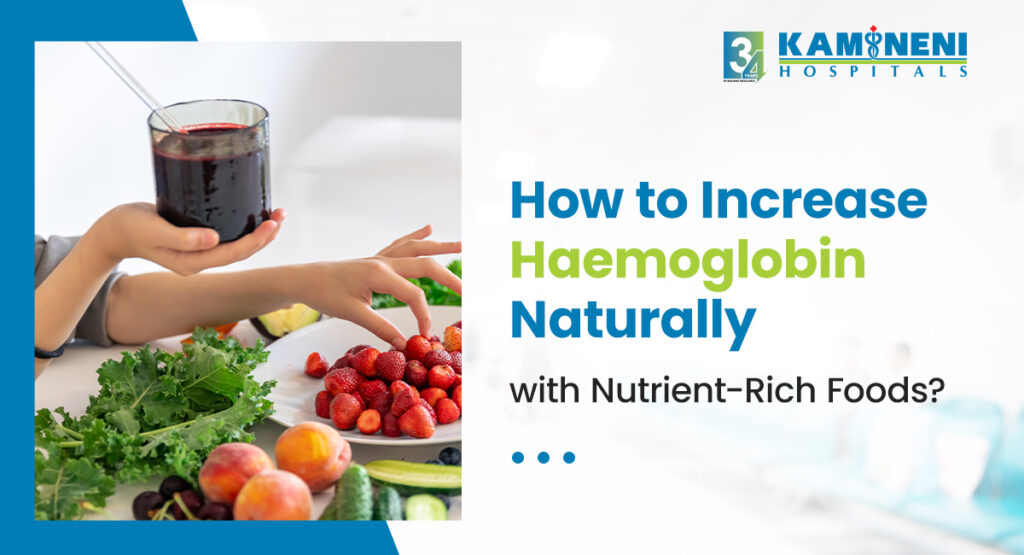
Iron from animal foods absorbs easily. Iron from plant foods needs Vitamin C at the same meal to work well. Both types help. The pairing makes the real difference.
If You Eat Meat, Eggs or Fish
- Chicken liver: the highest iron food in most Indian diets
- Mutton: iron and Vitamin B12 together in one meal
- Tuna and sardines: iron plus B12, easy to cook
- Eggs: iron, B12 and folate all in one food
If You’re Vegetarian or Vegan
Always eat a Vitamin C food at the same meal. Without it, your body takes in very little of the iron.
- Spinach (palak): iron and folate together
- Rajma and chana: high in iron and folate
- Horse gram (kulthi): one of the richest plant iron foods
- Tofu: a good iron option for vegetarians
- Pumpkin seeds: easy to add to any meal
- Jaggery: swap for sugar daily to add iron
Foods Rich in Vitamin C, Folate and Vitamin B12
Eat these at the same meal as your iron foods. Eating them at a different time reduces how much they help.
Vitamin C Foods (eat with iron-rich meals every time):
- Amla: the highest Vitamin C food in Indian cooking
- Guava: very high in Vitamin C, available year-round
- Raw capsicum: chop and add to salads or sabzis
- Lemon juice: squeeze over dal, sabzi or salads at every meal
- Raw tomato: adds Vitamin C and iron at the same time
Folate Foods:
- Methi leaves: high in folate and iron together
- Moong dal: affordable and a reliable folate source
- Beetroot: folate plus iron, works as juice or sabzi
- Broccoli: a good folate option when available
Vitamin B12 Foods (especially important for vegetarians):
- Eggs: the easiest B12 source for vegetarians
- Curd and paneer: give moderate B12
- Fortified cereals: check the label for added B12
- People on mixed diets with fish and meat rarely need extra B12
“I Eat Spinach Every Day. Why Isn’t My Haemoglobin Going Up?”
The answer isn’t to eat more spinach. It’s to change what you eat with it.
Spinach contains non-heme iron. Your gut takes in very little of it without Vitamin C at the same meal. If you eat palak sabzi with roti and a cup of chai together, that meal gives you almost no iron. Tannins in tea grab onto iron in your gut and stop your body from taking it in. That cup of chai with your meal is undoing what the spinach does.
Two changes that actually move haemoglobin numbers:
- Squeeze half a lemon over palak dal or sabzi at every meal
- Have your chai at least one hour after eating, not alongside it
These two changes do more than doubling your spinach. Iron needs Vitamin C to absorb. With it, your body takes in several times more iron from the same food.
Food Combinations That Raise Haemoglobin Faster
Eating the right foods together helps your body take in far more iron from each meal. These are practical Indian combinations.
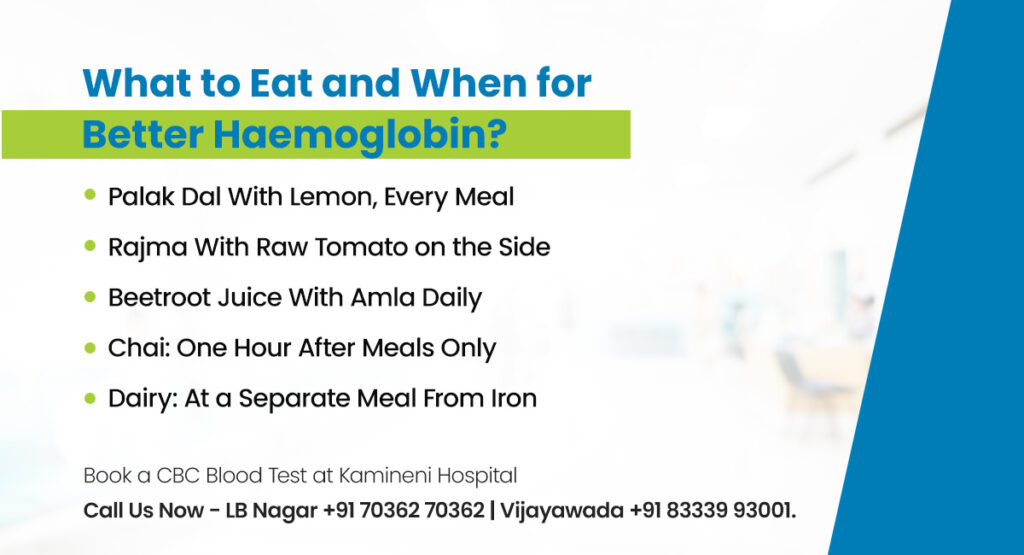
- Palak dal with lemon squeezed over it: iron and folate with Vitamin C to absorb both
- Rajma with raw tomato on the side: plant iron with Vitamin C
- Beetroot juice with amla: folate and iron with high Vitamin C
- Eggs with orange juice or guava: heme iron and B12 with Vitamin C
- Jaggery with a piece of guava: iron with natural Vitamin C
- Tofu stir-fried with capsicum: plant iron with Vitamin C from the vegetable
What to Change Alongside Your Iron-Rich Meals?
You don’t have to cut these out. You just need to move them away from your iron meals.
- Tea or coffee within one hour of eating: tannins grab onto iron and stop your body from absorbing it. Have chai one hour after the meal.
- Milk or curd at the same meal as iron foods: calcium and iron fight for absorption. Move dairy to a separate snack or a different meal.
- Plant iron without Vitamin C at the same meal: this is the most common reason vegetarians don’t see results. Add amla, lemon, guava or tomato to every iron-rich meal.
- Mostly processed or packaged foods: white bread, biscuits and refined flour carry little or no iron, folate or B12. They push out the foods that actually help.
Check Your Levels and Track Progress at Kamineni Hospital
Food changes take time. Most people see a rise in haemoglobin after six to eight weeks of eating right. But you need to know your starting level first so you can track real change.
A CBC (Complete Blood Count) test shows your current haemoglobin level. It also tells you if you’re low in B12 or folate, which changes what to focus on in your meals.
Start here:
- Get a CBC test to know your haemoglobin level now
- Focus on all four nutrients, not just iron
- Pair iron and Vitamin C at every meal
- Retest after six to eight weeks to track the change
Kamineni Hospital is one of the best hospital in Hyderabad for haematology and diagnostic care, and a trusted name as the best hematology hospital in Hyderabad, with 34+ years of experience treating blood health and nutritional deficiencies. Our specialist teams at LB Nagar, Hyderabad and Vijayawada review your blood report, run a full nutritional panel and guide a food plan based on your actual levels. Our Diagnostic Services include CBC and deficiency testing, with same-day results at most units.
Book at kaminenihospitals.com, call LB Nagar on +91 70362 70362, or reach Vijayawada on +91 83339 93001.
This content is for general patient education only. It does not replace medical consultation, diagnosis, or treatment advice from a qualified doctor. Please consult a specialist at Kamineni Hospitals for personalised guidance based on your symptoms and medical history.
Frequently Asked Questions
Which Food Raises Haemoglobin the Fastest?
Chicken liver is the highest iron food in most diets. For vegetarians, horse gram (kulthi dal) with lemon juice gives the fastest plant-based result.
How Long Does It Take to Raise Haemoglobin Through Diet?
Most people see a clear rise after six to eight weeks of eating the right food combinations. A CBC test before and after shows the real change.
Is Beetroot Juice Good for Low Haemoglobin?
Yes. Beetroot gives iron and folate. Add amla or lemon juice to the same glass to help your body take in much more of that iron.
Can I Drink Tea with Iron-Rich Meals?
No. Tannins in tea stop your body from absorbing iron. Have your tea at least one hour after an iron-rich meal.
What Is the Best Fruit for Low Haemoglobin?
Amla. It has the highest Vitamin C content of any Indian fruit and helps your body absorb more iron from every other food you eat at the same meal.
Do Supplements Work Better Than Food for Low Haemoglobin?
Supplements work faster for very low levels. For mild or moderate cases, the right food combinations work well and are easier to keep up long term. Check with a doctor before you start any supplement.