‘Heart disease’ is a phrase families hear a lot, but it rarely tells them what’s wrong. Is it a blocked artery, a weak heart, an odd heartbeat or a leaky valve? Each one needs different care.
Cardiovascular diseases are problems of the heart and blood vessels. The main types of cardiovascular diseases are coronary artery disease, heart failure, arrhythmia and valve disease. Stroke, leg artery disease, clots in the veins and heart defects from birth make up the rest. Cardiovascular diseases symptoms differ by type, and some types cause no signs for years.
We’re the cardiology team at Kamineni Hospitals, part of a group with 34+ years of care. Below, we’ll walk you through each type of cardiovascular disease, the signs to watch for, how to lower your risk and how we treat each cardiovascular disease.
What Are the Main Types of Cardiovascular Diseases?
There are eight main types. Four affect the heart itself: coronary artery disease, heart failure, arrhythmia and valve disease. Three affect blood vessels elsewhere: stroke, leg artery disease and clots in the veins. The eighth, congenital heart disease, is there from birth.
| Type | Main Warning Sign |
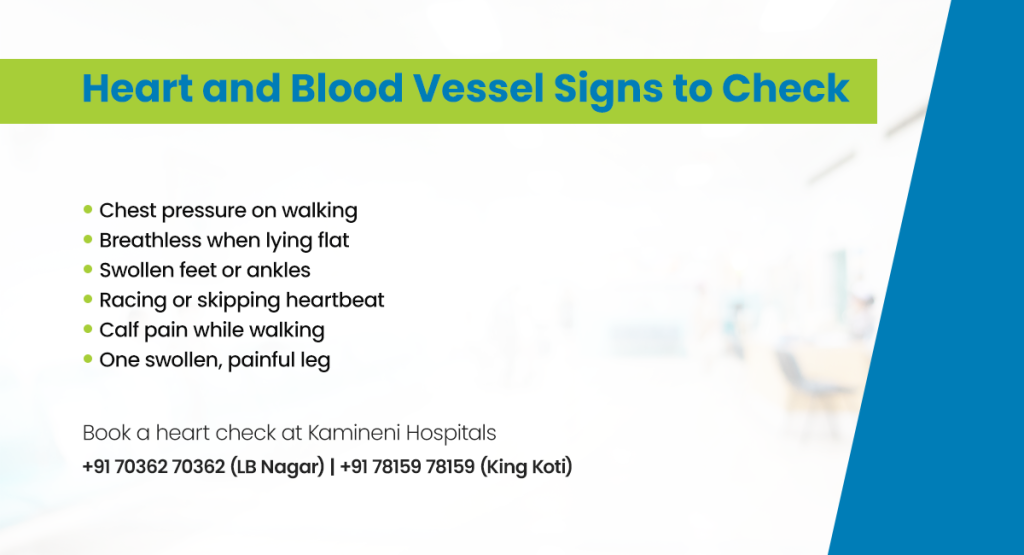
| Coronary artery disease | Chest pressure when you walk or climb |
| Heart failure | Short of breath, swollen feet |
| Arrhythmia | A racing, fluttering or skipping heartbeat |
| Valve disease | Short of breath and tired, slowly worse |
| Stroke | Face drooping, arm weakness or slurred speech |
| Peripheral artery disease | Calf pain on walking that eases with rest |
| Blood clots in veins | One swollen, painful leg |
| Congenital heart disease | Fast breathing or poor feeding in a baby |
-
Coronary Artery Disease and Heart Attack
In coronary artery disease, fat builds up inside the arteries that feed your heart. Doctors call it plaque. Over time, it narrows the arteries. Early on, you may feel a heavy chest on a fast walk that settles when you stop. A heart attack happens when a clot suddenly blocks one of these arteries.
-
Heart Failure
Heart failure means your heart can’t pump as strongly as your body needs. Your heart hasn’t stopped. It’s just weaker than usual. So fluid backs up into the lungs and legs. Watch for feeling short of breath when you walk or lie flat, swollen ankles, quick weight gain over a few days and feeling tired all the time.
-
Arrhythmia (Irregular Heartbeat)
An arrhythmia is a fault in the heart’s electrical wiring. Your heart may beat too fast, too slow or out of rhythm. You might feel:
- A pounding or fluttering in your chest
- Dizziness or a light head
- Fainting spells
- Feeling out of breath during simple tasks
One common type, atrial fibrillation, raises your risk of stroke. A Holter test records your heartbeat for 24 to 48 hours. It often catches odd beats that a short ECG misses.
-
Heart Valve Disease, Including Rheumatic Heart Disease
Your heart has four valves. Think of them as small doors that keep blood moving one way. In valve disease, a valve gets too tight or doesn’t shut fully. You slowly feel more tired and short of breath. Doctors often hear a murmur first. A murmur is an extra sound in the heartbeat.
In India, a common cause is rheumatic heart disease. It starts with a strep throat infection in childhood that isn’t treated fully. Years later, the body’s reaction to that old infection can scar the valves.
-
Stroke
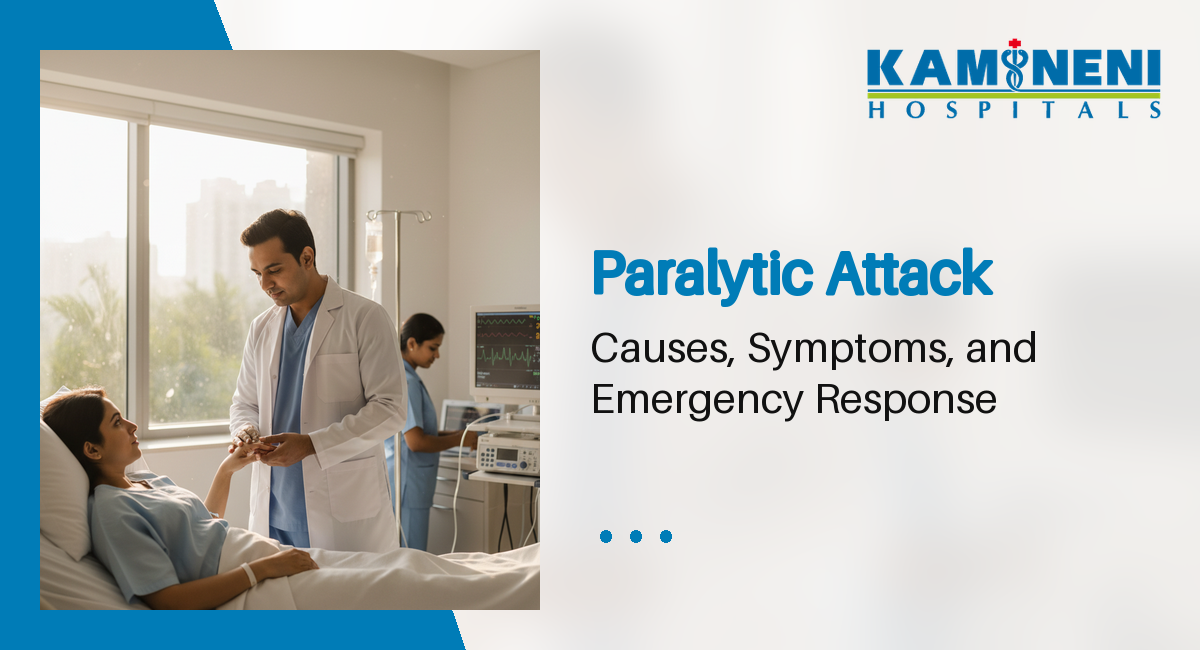
A stroke happens when blood stops reaching part of the brain. A clot or a bleed is the cause. The signs come on suddenly: one side of the face droops, an arm goes weak or speech slurs. A stroke needs emergency care within minutes. Our guide on paralysis attack causes and treatment explains the warning signs in more detail.
-
Peripheral Artery Disease
Peripheral artery disease means the arteries in your legs get narrow. The classic sign is calf pain when you walk. The pain goes away after a few minutes of rest. Some people also get a cold foot, shiny skin or foot sores that heal slowly. Smokers and people with diabetes are most at risk. Our vascular surgery team at LB Nagar treats blocked leg arteries.
-
Deep Vein Thrombosis and Pulmonary Embolism
Deep vein thrombosis (DVT) is a blood clot in a deep vein, usually in the leg. One leg turns swollen, warm and sore. Long trips, bed rest and recent surgery add to the risk. Sometimes a piece of the clot travels to the lungs. Doctors call this a pulmonary embolism. Get emergency care for sudden chest pain or short breath after a swollen leg.
-
Congenital Heart Disease
Congenital heart disease is a heart problem a baby is born with, such as a hole in the heart. A baby may breathe fast, sweat while feeding, gain weight slowly or have bluish lips. Some mild problems show up only in the teenage years or later. They’re often found as a murmur during a routine check.
Which Cardiovascular Diseases Symptoms Need Emergency Care?
Heart attack and stroke signs need help first. Why? The World Health Organization’s 2025 fact sheet says these two cause 85% of deaths from heart and blood vessel disease. So learn these signs well.
Get emergency help, or go to the nearest hospital, if you or someone near you has:
- Chest pain or pressure that lasts more than a few minutes, or keeps coming back
- Pain that spreads to the arm, jaw, neck or back, with sweating or nausea
- Sudden breathlessness, especially after a swollen leg
- A drooping face, a weak arm or slurred speech
- Fainting, or a sudden, very fast heartbeat
Please don’t drive yourself. Our emergency and critical care team at LB Nagar works round the clock, with a cardiac ICU.
Can You Have Heart Disease and Still Feel Fine?
Yes, you can. High blood pressure, high cholesterol and early narrowing of the arteries usually cause no signs at all. Many people only find out after a heart attack or stroke. Regular checks are the only sure way to catch them early.
This is common in India. A 2023 study by the Indian Council of Medical Research, published in The Lancet Diabetes & Endocrinology, found that 315 million Indians have high blood pressure and 213 million have high cholesterol. Most of them feel well.
Ask your doctor about these checks:
| Check | What It Finds |
| Blood pressure | High BP, the most common silent risk |
| Fasting sugar or HbA1c | Diabetes, which harms blood vessels |
| Lipid profile | High LDL, the ‘bad’ cholesterol |
| ECG | Rhythm problems and signs of old heart damage |
Many doctors suggest starting these checks around age 30. Start earlier if a parent or sibling had heart disease young.
How Can You Prevent Cardiovascular Diseases?
You can lower your risk by keeping BP, sugar and cholesterol in range, staying active and avoiding tobacco. Small daily habits count more than big, rare changes. These six steps cover most of the risk we see in our clinic.
- Cut Hidden Salt. Pickles, papad, namkeen and packaged snacks carry far more salt than home food. Less salt helps keep your BP down.
- Go Easy on Oil and Fried Food. Reusing frying oil and eating fried snacks daily push up bad cholesterol.
- Walk Every Day. WHO guidance suggests at least 150 minutes of moderate activity a week. A brisk 30-minute walk on most days meets that.
- Quit Tobacco in Every Form. Cigarettes, beedis and gutka all harm your blood vessels. Quitting helps at any age.
- Keep Your Numbers in Range. Take your BP, sugar and cholesterol medicines as your doctor prescribed, even when you feel fine.
- Treat a Child’s Sore Throat Fully. If a doctor gives antibiotics for strep throat, finish the full course. That’s how you help prevent rheumatic heart disease.
What Are the Options for Cardiovascular Diseases Treatment?
Cardiovascular diseases treatment depends on the type, how far it has gone and your health. Most people start with daily habit changes and medicines. Some need a procedure or surgery. We decide after tests like an ECG, an echo, a treadmill test or an angiogram.
| Type | Common Treatment Options |
| Coronary artery disease | Tablets, a stent, bypass surgery |
| Heart failure | Tablets, less salt and fluid, a device for some |
| Arrhythmia | Tablets, ablation, a pacemaker |
| Valve disease | Tablets, valve repair or a new valve |
| Stroke | Fast clot treatment, then rehab |
| Peripheral artery disease | Tablets, daily walks, opening blocked leg arteries |
| DVT and pulmonary embolism | Blood thinners |
| Congenital heart disease | Check-ups, tablets, surgery |
These problems touch the heart, the brain and the legs. So your care may need a heart doctor, a heart surgeon, a blood vessel surgeon and a brain doctor. A Hyderabad multispeciality hospital lets all these teams work as one. Our cardiothoracic and vascular surgery department does bypass and valve surgery when medicines and stents aren’t enough. Results depend on your condition, how early you start and how well you stick to your plan.
Not Sure Which Heart Problem You Have? Let’s Find Out
The right care starts with a clear answer. Kamineni Hospitals has 34+ years of care, NABH-accredited units and a heart emergency team on call 24/7. Meet Dr A. Ravikanth, Sr Consultant Cardiologist, at our cardiology team in LB Nagar, or Dr Saket S. Khetan, Consultant Interventional Cardiologist, at our cardiology team in King Koti.
Searching for the best multi speciality hospital near me, or a Hyderabad multispeciality hospital? Call +91 70362 70362 (LB Nagar) or +91 78159 78159 (King Koti), or book a consultation.
This content is for general patient education only. It does not replace medical consultation, diagnosis, or treatment advice from a qualified cardiologist or doctor. Please consult a specialist at Kamineni Hospitals for personalised guidance based on your symptoms and medical history.
Frequently Asked Questions
Which Is the Most Common Type of Cardiovascular Disease?
Coronary artery disease is the most common type. It narrows the heart’s arteries and is the main cause of heart attacks worldwide.
Can Cardiovascular Disease Be Reversed?
Some damage can’t be undone. But medicines, quitting tobacco and daily exercise can slow most types and lower your chance of a heart attack.
What’s the Difference Between a Heart Attack and Cardiac Arrest?
In a heart attack, a blocked artery starves the heart muscle. In cardiac arrest, the heart suddenly stops pumping. Both need emergency care.
At What Age Should I Get My Heart Checked?
Many doctors suggest regular BP, sugar and cholesterol checks from around 30. Start earlier if heart disease runs in your family.
Is Every Chest Pain a Heart Problem?
No. Acidity, muscle strain and anxiety can cause chest pain too. But chest pain with sweating or breathlessness needs emergency care.