


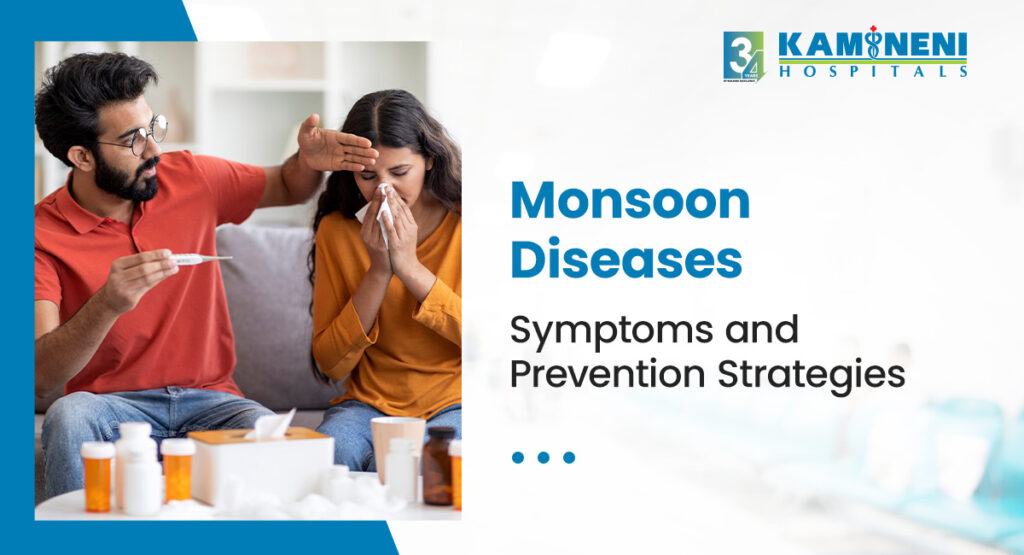
Dengue, malaria, typhoid, and viral fever all start the same way: fever, body ache, weakness. The question most families can’t answer is which one it is.
By the time symptoms point somewhere clearly, a day or two have already passed.
Monsoon diseases in Hyderabad fall into three groups based on how they spread: mosquito-borne, waterborne, and contact-spread. Knowing the group tells you which prevention actually works. Knowing the symptom differences tells you when to stop waiting and go to the best hospital in Hyderabad.
At Kamineni Hospitals, LB Nagar, our General Medicine and Emergency teams handle monsoon illness cases throughout the season with same-day diagnostic support and 34+ years of multispeciality care.
Which Monsoon Diseases Are Most Common in Hyderabad, and how does each one spread?
Three routes carry almost every monsoon disease in Hyderabad: a mosquito bite, contaminated food or water, and direct contact with floodwater. Different route, different disease, different prevention strategies.
Mosquito-Borne Diseases
The mosquito type matters; dengue and chikungunya come from the Aedes mosquito that breeds in clean, still water. Malaria comes from the Anopheles mosquito that breeds in dirty, stagnant water.
| Disease | Mosquito | Breeds In | Biting Hours |
| Dengue | Aedes aegypti | Clean still water: pots, trays, tyres | Day: dawn and dusk |
| Malaria | Anopheles | Dirty stagnant water: drains, puddles | Night |
| Chikungunya | Aedes aegypti | Same as dengue | Day : dawn and dusk |
Waterborne Diseases
Drinking water quality drops in Hyderabad during heavy rain. That’s when these typhoid, hepatitis, or cholera rise.
- Typhoid: Salmonella typhi bacteria in contaminated food and water. One of the most missed early because it starts slowly.
- Hepatitis A : A liver infection from contaminated food and water. Jaundice is often the first sign.
- Cholera: Contaminated water, fast dehydration. Manageable early.
Contact-Spread Diseases
- Leptospirosis: Bacteria enter through cuts or wounds during floodwater exposure. Very common in Hyderabad after the streets flood.
- Viral Fever: Spreads through droplets, coughing, and sneezing. The most common monsoon illness. Usually mild and short-lived.
Monsoon Disease Symptoms: How to Tell Them Apart?
The symptoms of monsoon diseases overlap. Dengue and malaria both start with a high fever. Typhoid and viral fever both bring fatigue. Self-diagnosis isn’t reliable here; a blood test is what confirms the disease.
| Disease | Fever Pattern | What Makes It Different |
| Dengue | High, sudden | Pain behind the eye, rashes, joint, and muscle ache |
| Malaria | Comes and goes | Chills then sweating |
| Typhoid | Climbs slowly over days | Stomach pain, poor appetite, and sometimes faint rose spots on the skin |
| Chikungunya | High and sudden | Intense joint pain lasting days to weeks |
| Leptospirosis | Sudden muscle pain | Calf tenderness, red eyes |
| Hepatitis A | Low-grade with tiredness | Eyes or skin turning yellow, urine turning dark |
| Viral fever | Mild to moderate | Sore throat, running nose, body ache |
Monsoon Disease Prevention Strategies That Actually Work
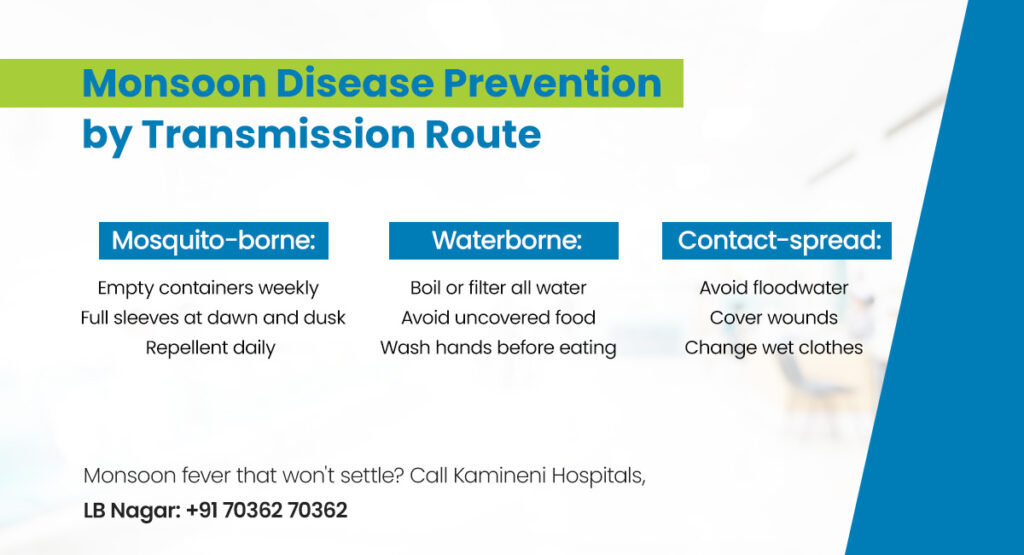
Most monsoon disease prevention strategies list the same tips under every disease. That’s not how it works in practice. Target the route of spread and one action makes it easier to remember.
For Mosquito-Borne Diseases:
- Every water-holding container at home needs emptying once a week
- Full sleeves between 6 and 8 AM and 6 and 8 PM
- Repellent on exposed skin before going out
For Waterborne Diseases:
- Boiled or filtered water only
- Street food, cut fruit, and uncovered cooked food carry the risk in monsoon months
- Wash Hands before eating and after raw food
- Cooked food left out in humidity grows bacteria fast, refrigerate promptly
For Contact-Spread Diseases:
- Waterproof dressings over any open wound
- Wet clothes and socks changed quickly
When Does a Monsoon Fever Need a Doctor and Not Home Care?
Forty-eight hours is the window. A monsoon fever that hasn’t improved by then or that comes with any of the signs below, needs a doctor, not more rest.
Go to a hospital if you see:
- Fever above 39°C (102°F) that doesn’t come down with paracetamol
- Fever still going after 48 to 72 hours
- Any bleeding : gums, red pinpoint rash on skin, blood in urine or stool
- Bad headache with vomiting, especially pain behind the eyes
- Eyes or skin turning yellow at any stage
- Confusion, extreme fatigue, or trouble staying awake
- Calf pain after walking through floodwater
- Very dark urine or little to no urination
Conclusion
Timing is what separates a manageable monsoon illness from a serious one. Most fevers that come in with the rains settle on their own. But some don’t and the ones that don’t can move fast. Forty-eight hours without improvement, or any of the red flags above, means it’s time to go.
At Kamineni Hospitals, the best liver transplant hospital in Hyderabad, the General Medicine and Emergency departments run same-day: dengue NS1, malaria smear, typhoid Widal, liver function tests.
Patients from Dilsukhnagar, Nagole, and Vanasthalipuram come here through the season for exactly this. Call +91 70362 70362 to book an appointment.
Disclaimer: This content is for general patient education only. It does not replace medical consultation, diagnosis, or treatment advice from a qualified doctor. Please consult a specialist at Kamineni Hospitals for personalised guidance based on your symptoms and medical history.
Frequently Asked Questions
What are the most common monsoon diseases in Hyderabad?
Six diseases account for most monsoon admissions in Hyderabad: dengue, malaria, typhoid, chikungunya, viral fever, and leptospirosis. Hepatitis A and cholera also rise after heavy rain when water contamination goes up.
How is dengue different from a normal viral fever?
The fever hits harder and faster with dengue, high temperature from day one, severe pain specifically behind the eyes, and joint pain that’s hard to ignore. A rash usually shows up after day three.
What’s the fastest way to prevent dengue during monsoon?
Clear every water-holding container around the house once a week, flower pots, cooler trays, and unused buckets are where the Aedes mosquito breeds indoors. Repellent on skin and full sleeves at dawn and dusk add protection.
When should I take my child to a hospital for monsoon fever?
Same day if the fever’s above 39°C, hasn’t come down in 48 hours, or if the child isn’t drinking, is unusually sleepy, or has a rash. Children dehydrate much faster than adults.
Can monsoon diseases affect people with diabetes or liver conditions more severely?
Yes, and the difference is significant. Platelet counts fall faster during dengue in people with weakened immunity. Leptospirosis can push someone with existing kidney or liver disease into acute failure within days.