




You went to bed fine. By morning, you’re running to the bathroom every hour. Stomach cramps, loose stools, weakness and now you have no idea whether to drink something and rest or head straight to a doctor.
That can be diarrhea. Diarrhea is a condition passing loose or watery stools three or more times in 24 hours. Most cases clear up on their own within a day or two. But some don’t. And the ones that don’t can turn into something more serious especially when the body starts losing too much fluid.
At Kamineni Hospitals, our gastroenterology team in LB Nagar has been managing gut infections, digestive disorders, and chronic bowel conditions for over 34 years. We see what happens when people wait too long.
This blog tells you what’s actually causing your diarrhea symptoms, what dehydration looks like and the signs that mean you shouldn’t wait anymore.
How Do Doctors Classify Diarrhea?
Duration is the first thing a doctor asks about. One day of loose stools is a very different problem from four weeks of them.
Acute vs. Chronic Diarrhea: What’s the Difference?
Acute diarrhea starts suddenly. It’s usually over within one to two days. Most of the time, it’s a food issue or a short infection.
Chronic diarrhea is different. It lasts more than four weeks, or it keeps coming back after you think it’s gone.
| Type | Duration | Diarrhea Causes | What to Do |
| Acute | 1 to 2 days | Infection, contaminated food | ORS, rest, monitor closely |
| Persistent | 2 to 4 weeks | Antibiotics, gut irritation | See a doctor if not improving |
| Chronic | More than 4 weeks or recurring | IBS, IBD, malabsorption | Gastroenterologist evaluation needed |
ORS, Oral Rehydration Solution is a simple glucose-salt mix dissolved in water that replaces the fluids and minerals your body loses. It’s available at any pharmacy without a prescription.
What Causes Diarrhea in Most People?
The diarrhea causes vary by how long symptoms have lasted and what you’ve been exposed to. Infections, food, medications, and certain gut conditions each play a role.
- Infections :
Viral gut infections like rotavirus spread quickly, especially among children. Bacterial infections from E. coli, Salmonella, and Shigella usually trace back to contaminated water or food. They tend to spike during monsoon season when tap and borewell water quality drops.
- Food and Medication :
Undercooked meat, street food, and unwashed produce introduce bacteria directly into the gut. Antibiotics knock out good bacteria along with bad ones, so loose stools during or after a course of antibiotics aren’t unusual. Some people’s guts can’t process gluten or lactose properly, and diarrhea is how that shows up.
- Underlying Gut Conditions:
IBS, or Irritable Bowel Syndrome, causes recurring diarrhea or constipation sometimes both without any visible damage to the gut on a scan or test. IBD, or Inflammatory Bowel Disease, is different. It involves real inflammation inside the gut lining and includes conditions that don’t settle on their own.
What Are the Common Symptoms of Diarrhea?
Beyond loose stools, the body gives you several signals depending on what’s causing the problem. Common diarrhea symptoms to watch for:
- Watery or loose stools, at least three times a day
- Cramping and bloating in the stomach
- Nausea, with or without vomiting
- Sudden, urgent need to use the bathroom
- Low-grade fever with infections
- Tiredness and general weakness
The one symptom that worries doctors more than any other is dehydration, the rapid loss of fluid and salts your body needs to function.
Check for these four signs at home:
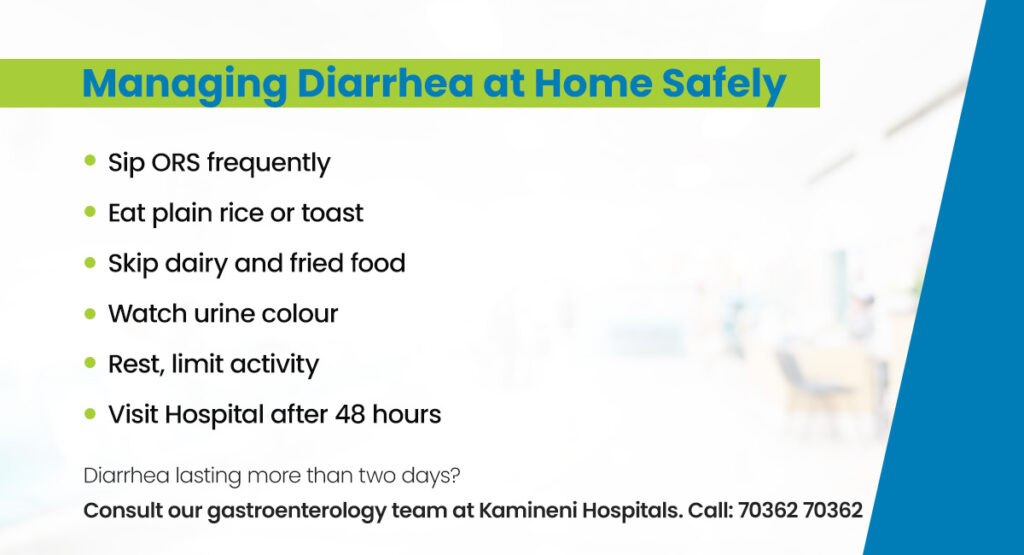
- Urine that’s dark yellow, or very little urination at all
- Dry mouth and dry lips
- Dizziness when you stand up
- Unusual tiredness in a child
Infants and elderly patients dehydrate much faster than healthy adults. Don’t wait for things to get worse, visit Kamineni Hospitals, the best hospital in Hyderabad.
Is Diarrhea Serious, or Will It Go Away on Its Own?
For most healthy adults, acute diarrhea passes within 48 hours. Rest and fluids are genuinely enough in many cases. But here’s what goes wrong.
People manage symptoms at home for two or three days without realising the body’s getting more depleted. Some symptoms tell you the situation has changed. Go to a hospital if you see:
- Blood or pus in your stool
- Fever above 39°C (102°F)
- Very dark urine or no urination for several hours
- Dizziness when you stand, or fainting
- Diarrhea beyond 48 hours with no improvement
- Severe stomach pain that doesn’t ease between episodes
- A child under two, an elderly person, or someone with a chronic condition who has diarrhea.
When Do You Need a Gastroenterologist for Diarrhea?
If it’s been more than two weeks, it keeps coming back, or you’re losing weight without trying; those aren’t signs to manage at home anymore. Recurring diarrhea can point to IBS, IBD, a chronic parasitic infection, or early-stage conditions that respond much better when caught before they progress.
A gastroenterologist is a specialist doctor who focuses on the digestive system. The job isn’t just to stop the symptoms. It’s to find out what’s actually driving them and provide the diarrhea treatment.
At Kamineni Hospitals, the gastroenterology team works across gut infections, endoscopy, liver disease, and complex digestive disorders. The department operates within a NABH-accredited, multispeciality hospital with 34+ years of clinical experience. If your gut’s been off for more than two weeks, that’s the signal. Don’t wait for it to get worse before getting it checked.
Book a consultation with the gastroenterology team at : +91 70362 70362.
Disclaimer: This content is for general patient education only. It does not replace medical consultation, diagnosis, or treatment advice from a qualified gastroenterologist or doctor. Please consult a specialist at Kamineni Hospitals for personalised guidance based on your symptoms and medical history.
Frequently Asked Questions
What should you eat when you have diarrhea?
Boring food like plain rice, a banana, dry toast or unsalted crackers. Avoid anything spicy, fried, dairy products or coffee. The gut’s already irritated and rich food just keeps the problem going. Sip ORS or water through the day in small amounts, frequently.
Can diarrhea cause dehydration quickly?
Much faster than people expect. Watery stools pull fluid and salts out of the body with every trip to the bathroom. A healthy adult can handle a day of this reasonably well. A child under two years can’t. Neither can an elderly person, or someone already managing diabetes or a kidney condition. In those cases, a few hours is enough to cause real trouble. Start ORS early.
Is diarrhea a sign of a serious stomach condition?
Usually not, if it’s just a day or two after a poor meal. That kind clears up and doesn’t come back. The concern is it comes with blood in the stool, or sits alongside weight loss you haven’t been able to explain. IBS and IBD both tend to come in slowly. People often chalk up the early symptoms to food or stress, and months pass before anyone puts a name to it.
What tests does a doctor do for persistent diarrhea?
First, a stool culture. It looks for bacteria or a parasite as the cause. Then blood tests electrolyte levels, signs of infection, how well the body is coping overall. If loose stools have been going on for the past four weeks, a colonoscopy is usually next. A colonoscopy is a camera passed into the large intestine. It lets the doctor see the gut lining directly and check for inflammation or damage that doesn’t show on a blood test.