


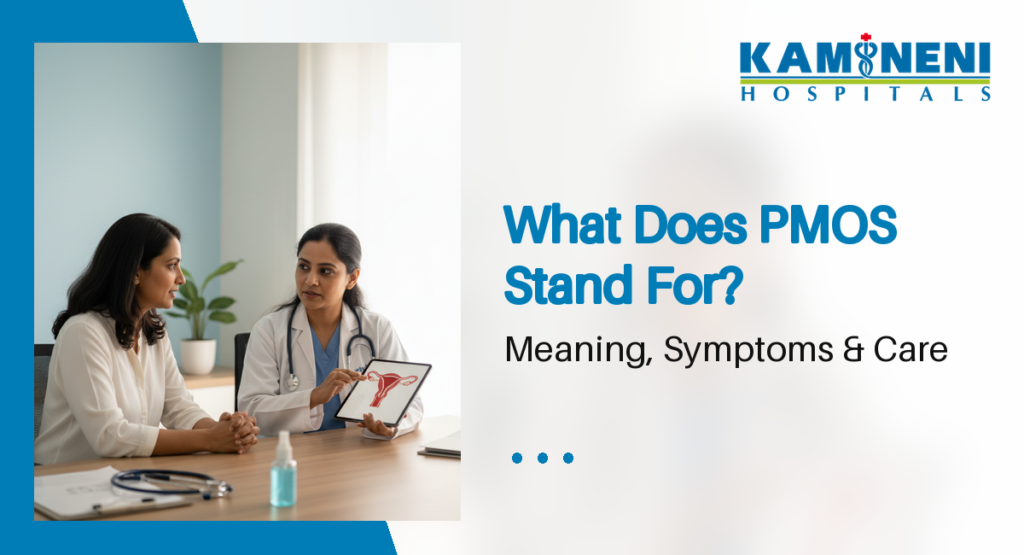
What does pmos stand for is the question millions of women are asking since doctors stopped using the name PCOS. The answer matters because the new name changes how you understand your body and what to expect from care. PMOS stands for Polyendocrine Metabolic Ovarian Syndrome. Each word in that name names a body system the condition actually affects, not just the ovaries. At Kamineni Hospitals, our gynaecology and endocrinology teams see this condition daily across 34+ years of specialist-led care, and we choose tests from your symptoms and history rather than selling fixed packages. Read on to learn what each letter means, why the name changed, and what symptoms to watch for.
Key takeaways
- PMOS means Polyendocrine Metabolic Ovarian Syndrome, replacing the old name PCOS.
- The new name recognises that multiple hormone glands, metabolism, and ovarian function are all involved.
- Common symptoms include irregular periods, excess hair growth, weight gain, and fertility challenges.
- Diagnosis at Kamineni Hospitals is symptom-led, not package-driven, with endocrinology and gynaecology working together.
- There is no cure, but lifestyle changes, medicines, and specialist follow-up can manage symptoms effectively.
What does PMOS stand for exactly?
PMOS stands for Polyendocrine Metabolic Ovarian Syndrome. The name breaks into four parts, and each part names something real that happens in your body.
- Polyendocrine: Multiple hormone-producing glands are affected, not just the ovaries. Your thyroid, adrenal glands, and pancreas can all be involved.
- Metabolic: Your body processes insulin and manages weight differently. Many women with PMOS have insulin resistance.
- Ovarian: Your ovaries still matter. They may produce excess androgens or develop multiple small follicles.
- Syndrome: A group of signs and symptoms that appear together, not a single disease with one cause.
The Why is PCOS Renamed as PMOS? page explains the clinical reasoning behind this shift in more detail.
Why did doctors change PCOS to PMOS?
The old name, Polycystic Ovary Syndrome, focused only on ovaries and cysts. That misled patients and sometimes doctors. Many women with PMOS do not have ovarian cysts at all. The name PCOS also ignored the metabolic and endocrine parts of the condition, which often cause the most long-term health risk.
According to the Cleveland Clinic overview of PMOS symptoms and treatment, the new name better reflects that this is a hormonal imbalance where ovaries create excess hormones, but the impact spreads across multiple systems. The American Society for Reproductive Medicine has endorsed this change. PMOS impacts roughly 1 in 8 women worldwide.
The NHS guidance on Polyendocrine metabolic ovarian syndrome (PMOS) notes that the condition can affect hair growth, periods, fertility, and mood, and that treatments and lifestyle changes can help manage it.
At Kamineni Hospitals, we see women who spent years thinking their symptoms were separate problems because the old name did not connect the dots. The PMOS name helps our Obstetrics and Gynaecology and General Medicine teams coordinate care across departments when your case involves hormones, metabolism, and reproductive health together.
What symptoms should you watch for with PMOS?
PMOS symptoms vary widely between women. You might have several or just one or two. The symptoms often start in adolescence or the twenties.
| Body system | Common signs to notice |
|---|---|
| Menstrual | Irregular periods, very light or very heavy bleeding, or periods that stop for months |
| Skin and hair | Acne that persists past teenage years, excess facial or body hair, hair thinning on the scalp |
| Metabolic | Weight gain especially around the waist, difficulty losing weight, darkened skin patches |
| Fertility | Difficulty conceiving due to irregular or absent ovulation |
| Mood and energy | Fatigue, low mood, anxiety, or sleep disruption |
Not every woman with PMOS has all these symptoms. Some have mainly metabolic issues. Others notice fertility problems first. This variation is exactly why the old name failed, and why the new name helps.
If you notice these patterns, our Comprehensive Complete Annual Health Checkup For Women includes hormone and metabolic screening that can flag PMOS for further specialist review.
How is PMOS diagnosed at Kamineni Hospitals?
Diagnosis starts with your story. Your specialist asks about your periods, weight changes, skin and hair changes, family history, and any fertility concerns. Tests are chosen from this conversation, not pulled from a fixed package.
Typical evaluation may include:
- Hormone blood tests: Androgens, LH, FSH, thyroid function, prolactin, and sometimes cortisol.
- Metabolic tests: Fasting insulin, glucose, and HbA1c to check how your body handles sugar.
- Ultrasound: Ovarian appearance helps in some cases, though you can have PMOS without polycystic-looking ovaries.
- Rule-out tests: Your doctor may check for thyroid disorders, Cushing’s syndrome, or other conditions that mimic PMOS.
The Diagnostic Services team at Kamineni Hospitals coordinates these tests, and results are reviewed by both gynaecology and endocrinology when needed. Our Radiology department provides pelvic ultrasound when clinically indicated.
We do not sell pre-set test packages for PMOS because your symptom pattern determines what needs checking. A woman with fertility concerns needs different evaluation from one with metabolic symptoms and regular periods.
What treatments help manage PMOS?
There is no cure for PMOS, but symptoms can be managed well with the right combination of approaches. Treatment targets your specific concerns, not the condition as an abstract label.
| Concern | Common management approaches |
|---|---|
| Irregular periods | Hormonal contraception or cyclical progestogens to regulate bleeding and protect the womb lining |
| Excess hair or acne | Anti-androgen medicines, topical treatments, or cosmetic approaches |
| Metabolic issues | Weight management support, metformin for insulin resistance, dietary guidance |
| Fertility | Ovulation induction medicines, monitoring, and referral for assisted conception if needed |
| Long-term health | Regular screening for diabetes, cholesterol, blood pressure, and endometrial health |
Lifestyle changes form the foundation for most women. Modest weight loss, regular physical activity, and a lower glycaemic load diet often improve metabolic symptoms and sometimes restore ovulation.
Our Kamineni Hospitals Launches Dedicated Weight Loss Centre for Comprehensive Obesity Care programme supports women with PMOS-related weight and metabolic concerns through structured, medically supervised approaches.
For fertility concerns, the Obstetrics and Gynaecology team provides ovulation monitoring and induction, working with endocrinology when metabolic factors complicate conception.
When should you see a specialist about PMOS?
Book a consultation if your periods have become irregular, if you have noticed excess hair growth or persistent acne as an adult, if you are struggling to conceive after 12 months of trying, or if you have gained weight around your middle that does not respond to your usual efforts. These patterns together strongly suggest PMOS, especially if they began in your teens or twenties.
Do not wait for all symptoms to appear. One persistent symptom is enough to check. Early diagnosis helps prevent long-term complications like type 2 diabetes, cardiovascular risk, and endometrial problems.
Kamineni Hospitals runs Obstetrics and Gynaecology and General Medicine departments that coordinate on PMOS cases. Each branch has 24/7 emergency and critical care for acute concerns. Call +91 70362 70362 to book an appointment or enquire about our women’s health checkup packages.
PMOS stands for Polyendocrine Metabolic Ovarian Syndrome, a name that finally matches what women actually experience across hormones, metabolism, and ovarian health. The change from PCOS helps you and your doctor see the full picture and choose tests and treatments that fit your specific symptom pattern. Kamineni Hospitals offers specialist-led, diagnosis-first gynaecology and endocrinology care with 34+ years of experience. Call +91 70362 70362 to book a consultation or ask about our women’s health screening options.
FAQs
what does pmos stand for in medical terms
PMOS stands for Polyendocrine Metabolic Ovarian Syndrome. It is the new clinical name for the condition previously called Polycystic Ovary Syndrome (PCOS). Each word in the name reflects a body system involved: multiple hormone glands, metabolism, and ovarian function.
Is PMOS the same as PCOS
Yes, PMOS and PCOS refer to the same condition. PMOS is the updated name that better reflects the full range of body systems affected. The change was endorsed by reproductive medicine organisations to move focus beyond ovaries and cysts alone.
What are the first signs of PMOS I should notice
Watch for irregular or absent periods, adult acne or excess facial and body hair, weight gain especially around the waist, and difficulty conceiving. Mood changes and fatigue are also common. Not every woman has all symptoms.
Can PMOS be cured completely
There is no cure for PMOS, but symptoms can be managed effectively. Treatment targets your specific concerns, whether periods, skin and hair changes, weight, metabolism, or fertility. Lifestyle changes often form the foundation of management.
How is PMOS diagnosed by a gynaecologist
Diagnosis is based on your symptoms, hormone blood tests, metabolic screening for insulin and glucose, and sometimes pelvic ultrasound. Your specialist chooses tests from your clinical history rather than using a fixed package. Other conditions that mimic PMOS must be ruled out.
Does PMOS affect my ability to get pregnant
PMOS can affect fertility because irregular ovulation makes timing conception difficult. Many women with PMOS do conceive, sometimes with ovulation support from a gynaecologist. Early specialist input improves your options.