




Most people have felt it after sitting in one position too long. The foot goes numb. You stand up, shake it out, and it goes away in a minute. That kind of numbness is harmless.
The kind that lingers, spreads, or keeps coming back is different. It means a nerve is not transmitting sensation correctly. The cause can be as simple as a compressed nerve at the wrist or as serious as a stroke. The difference between the two is identifiable, but only with the right clinical evaluation.
At Kamineni Hospitals, our neurology teams at LB Nagar and King Koti diagnose numbness across the full range, from peripheral nerve compression to brain and spinal conditions, backed by 34+ years of experience and on-site nerve function testing.
What Are the Different Types of Numbness?
The numbness types, its location and how quickly it started tell a neurologist whether the problem is in a peripheral nerve, the spinal cord or the brain.
Temporary Numbness
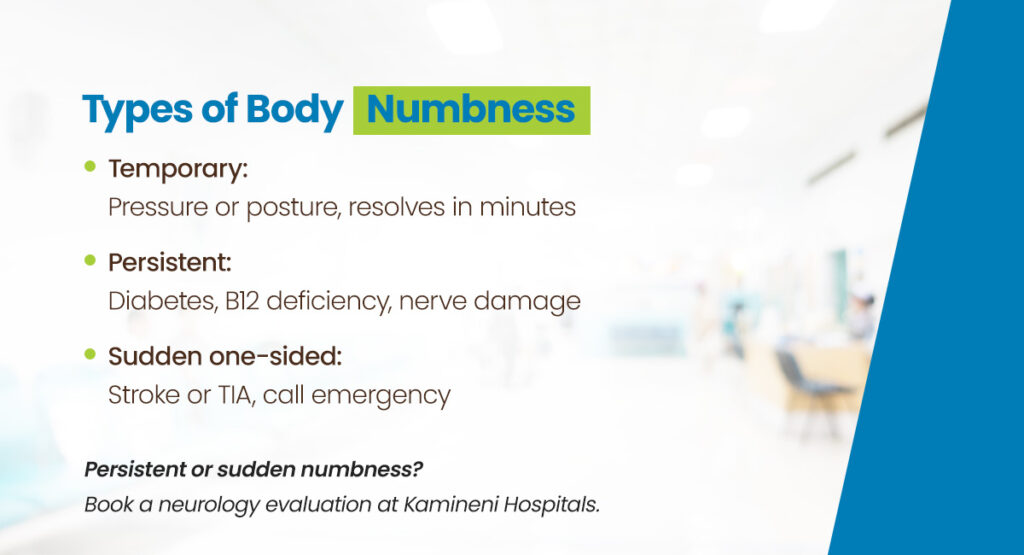
Temporary numbness resolves on its own within minutes. Sitting with your legs crossed for too long, sleeping with an arm bent under your body, wearing tight shoes. These compress a nerve or cut off blood flow briefly. The sensation returns as soon as the pressure goes.
This type needs no treatment and is not a sign of nerve damage.
Persistent or Recurring Numbness
Persistent numbness lasts hours, returns regularly, or gets worse over time. A patient with diabetes might notice a constant low-level tingling in both feet. A desk worker might feel fingers going numb every morning after sleep. These patterns point to an underlying condition that needs investigation.
Nerve damage from uncontrolled diabetes or compressed spinal nerves gets harder to reverse the longer it goes untreated.
One-Sided or Sudden-Onset Numbness
Numbness that starts suddenly and affects one side of the face, one arm or one leg is a neurological emergency until proven otherwise. This is the most common early presentation of stroke and transient ischaemic attack (TIA).
If someone develops sudden one-sided numbness, call emergency services immediately. Do not wait to see if it passes.
| Type | Onset | Location | Most Likely Cause | Urgency |
| Temporary | Minutes | One limb, foot or arm | Pressure or posture | None |
| Persistent | Hours to ongoing | Both feet, both hands | Diabetes, B12 deficiency, nerve damage | See a doctor |
| Sudden one-sided | Minutes | Face, arm or leg on one side | Stroke, TIA | Emergency |
What Are the Most Common Causes of Numbness in the Body?
Numbness causes fall into two categories: peripheral causes, which involve the nerves outside the brain and spinal cord, and central causes, which originate in the brain or spinal cord itself.
Peripheral Causes of Numbness
Peripheral causes are the more common ones, and most respond well to treatment:
- Diabetic neuropathy: High blood sugar over years damages the nerve fibres that supply the feet and lower legs. This is the most common cause of chronic numbness in India. Numbness typically starts in both feet and moves upward gradually.
- Vitamin B12 deficiency: B12 maintains the myelin sheath that insulates nerve fibres. When B12 drops, the sheath thins and nerves misfire, causing tingling and numbness in the hands and feet. Most common in long-term vegetarians and people taking metformin for diabetes.
- Nerve compression: A herniated disc in the cervical or lumbar spine, carpal tunnel syndrome at the wrist, or a compressed nerve root causes numbness in a specific limb or skin region. The area of numbness follows the compressed nerve’s distribution exactly.
- Peripheral neuropathy from other causes: Nerve damage from chronic alcohol use, chemotherapy drugs or chronic kidney disease causes numbness that typically starts in the toes and fingertips and spreads inward over time.
- Electrolyte imbalances: Low calcium, potassium or magnesium disrupts nerve signal transmission and causes numbness or tingling, often in multiple areas simultaneously.
Central Causes of Numbness
Central causes involve the brain or spinal cord and need prompt neurological evaluation:
- Stroke or TIA: Sudden numbness on one side of the face, arm or leg is the most common presenting symptom of stroke. A TIA produces identical symptoms that resolve within 24 hours. Both require emergency evaluation because TIA precedes stroke in many patients.
- Multiple sclerosis: MS destroys the myelin sheath around central nervous system nerve fibres. Patchy numbness and tingling in the trunk, limbs or face are often the earliest symptoms, and they fluctuate in early stages.
- Spinal cord compression: A tumour, abscess or severely herniated disc pressing on the spinal cord causes numbness below the level of compression. Both legs are typically affected simultaneously, which distinguishes it from a single-nerve problem.
- Brain tumour: A tumour pressing on the brain’s sensory cortex or sensory pathways causes numbness on the opposite side of the body. Headaches, visual changes or cognitive changes usually accompany it.
A neurologist uses the pattern, body location and onset speed to identify which category applies before ordering any tests.
What Symptoms Appear Alongside Numbness?
What accompanies numbness helps a doctor tell the difference between a compressed nerve and a stroke, MS or spinal emergency.
Symptoms That Are Usually Not Serious
- Tingling or pins-and-needles in one limb that resolves with movement or position change
- Numbness after prolonged pressure, sitting in one position or repetitive hand activity
- Mild numbness in both hands that started recently with no weakness or other symptoms
- Occasional foot numbness linked to tight footwear or prolonged standing
Red Flag Symptoms That Need Immediate Evaluation
These combinations with numbness require same-day emergency assessment:
- Sudden numbness on one side of the face, arm or leg
- Numbness with sudden arm or leg weakness
- Numbness with difficulty speaking, finding words or swallowing
- Numbness with a sudden severe headache unlike any before
- Numbness spreading rapidly upward from the legs
- Numbness in the saddle area (inner thighs, groin, buttocks) with loss of bladder or bowel control
- Numbness that started immediately after a head, neck or back injury
These point to stroke, spinal cord injury or central nervous system emergencies where every hour of delay changes what is recoverable.
How Do Doctors Diagnose the Cause of Numbness?
A neurologist identifies which body areas are affected, whether the numbness is complete or partial, when it started, how fast it progressed and what other symptoms are present. In most cases, the clinical pattern identifies the likely cause and tests confirm it.
Tests used to confirm the cause:
- Nerve Conduction Study (NCS) and EMG: Measures the speed and strength of electrical signals through specific nerves and muscles. Identifies which nerves are damaged, how severely, and whether the damage is in the nerve sheath or the nerve fibre itself.
- Blood tests: Screen for diabetes, B12 deficiency, thyroid disorders, kidney function, calcium, potassium and magnesium. These address the most common correctable causes of numbness.
- MRI of the brain or spine: Used when stroke, MS, spinal cord compression or a brain or spinal tumour is suspected. MRI shows structural lesions, demyelination plaques and compressive pathology clearly.
- CT scan: Used in acute stroke situations when MRI is not immediately available.
What Are the Effective Treatments for Numbness?
Numbness treatments target the condition causing the nerve problem, not the numbness itself. The right treatment depends entirely on the correct diagnosis.
Medicines for Numbness
- Gabapentin or pregabalin: Used for numbness caused by neuropathic nerve damage, diabetic neuropathy and post-herpetic neuralgia. They reduce abnormal nerve signalling.
- Amitriptyline or duloxetine: Effective for nerve pain and numbness driven by peripheral neuropathy. They work by altering how the brain processes abnormal nerve signals.
- B12 injections or supplements: For deficiency-related numbness. Improvement in symptoms typically begins within four to eight weeks of supplementation.
- Disease-modifying therapies for MS: Prescribed by a neurologist to slow demyelination and reduce relapse frequency, which reduces the recurrence of MS-related numbness.
- Antiplatelet and blood pressure medicines after TIA: Reduce the risk of progressing to a full stroke, which prevents further sensory damage.
Do not self-medicate for persistent or unexplained numbness. The same symptom has different causes that need different medicines.
Physiotherapy and Rehabilitation
Patients with nerve compression, post-surgical weakness or residual numbness after stroke benefit from physiotherapy. Guided exercises reduce nerve compression, improve circulation and retrain sensory pathways. The physiotherapy teams at Kamineni Hospitals work alongside the neurology department at LB Nagar and King Koti.
Treating the Root Condition
- Tighter blood sugar control in diabetic patients slows further nerve fibre damage
- Surgical decompression of a herniated disc or carpal tunnel releases the compressed nerve and restores sensation over weeks to months
- B12 supplementation rebuilds the myelin sheath and reduces numbness in deficiency cases
- Stroke rehabilitation retrains the brain’s sensory pathways through structured physical and occupational therapy
When Should You See a Neurologist for Numbness?
A GP handles the initial assessment well: blood tests, a basic neurological exam and a medication review are reasonable first steps. See a neurologist directly if:
- Numbness persists beyond two weeks with no obvious positional or pressure cause
- It returns regularly without a clear trigger
- Both hands and both feet are affected at the same time
- It started after a diagnosis of diabetes, MS or a spinal condition
- Any red flag symptom listed above is present
Call emergency services immediately if numbness starts suddenly, affects one side of the body, or arrives with weakness, speech difficulty or a severe headache.
Consult the Best Neurology Hospital in Hyderabad
Recurring numbness has a cause. In most cases, a neurologist can identify it with the right tests and build a treatment plan around the specific diagnosis.
Kamineni Hospitals, rated as the best brain hospital in Hyderabad and among the best neurology hospital in Hyderabad, has dedicated neurology departments at LB Nagar and King Koti. Each unit offers nerve conduction studies, EMG, MRI and complete neurological evaluation on-site, with no third-party referrals and no waiting for external reports.
With 34+ years of experience, 40+ specialty departments and 16 million+ lives cared for across South India, we identify and treat the underlying condition causing the numbness, whether that is diabetic neuropathy, a spinal disc problem, a B12 deficiency, MS or a brain condition. All relevant departments are in the same hospital.
LB Nagar: +91 70362 70362 | King Koti: +91 78159 78159
Disclaimer: This blog is intended for educational and informational purposes only. It should not be considered medical advice, diagnosis, or treatment. Please consult a qualified healthcare professional for any medical concerns or decisions.
Frequently Asked Questions
Can numbness be a sign of a brain tumour?
It can be, but it is uncommon. A brain tumour causes numbness when it presses on the brain’s sensory cortex or sensory pathways, producing numbness on the opposite side of the body or face. Headaches, visual changes, weakness or cognitive changes usually appear alongside it. Numbness without any other symptom is far more likely to have a peripheral nerve cause.
Why do I get numbness in my hands at night?
Nighttime hand numbness is most commonly carpal tunnel syndrome. Sleeping with the wrist bent compresses the median nerve where it passes through the carpal tunnel at the wrist. The result is numbness, tingling or pain in the thumb, index and middle fingers during or just after sleep. A nerve conduction study confirms the diagnosis and shows the severity.
Can stress or anxiety cause body numbness?
Yes. Hyperventilation during anxiety episodes lowers carbon dioxide levels in the blood, which triggers tingling and numbness around the mouth, hands and feet simultaneously. This resolves when breathing normalises. It should not be assumed to be the cause without ruling out other explanations, especially if the numbness is one-sided or persistent.
Is numbness always related to nerves?
Almost always. Numbness is a sensory symptom and sensory signals travel exclusively through the nervous system, either peripheral nerves, the spinal cord or the brain. Reduced blood flow can cause temporary numbness, but it works by depriving the nerve of oxygen rather than bypassing the nerve entirely. Structural causes like a herniated disc cause numbness by compressing a nerve.
Which doctor should I see for numbness: a neurologist or an orthopaedic specialist?
If numbness accompanies neck pain, back pain or a known disc or joint problem, start with an orthopaedic specialist. If numbness is in both hands or both feet without a clear spinal trigger, if it is widespread, or if other neurological symptoms are present, see a neurologist first. A neurologist can handle the full diagnostic workup and refer on if the cause turns out to be structural.