


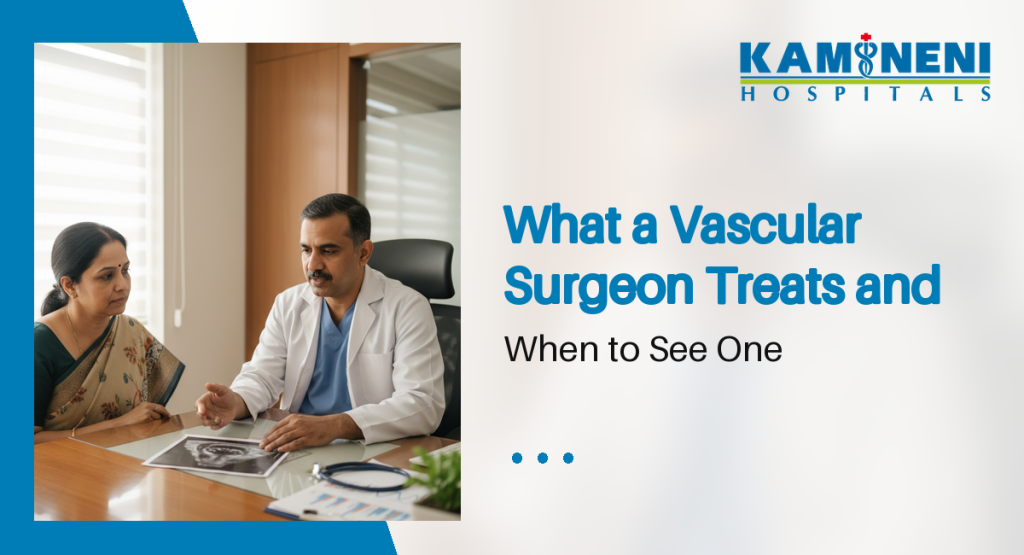
Vascular surgeon is the specialist you need when leg pain while walking, swollen veins, or cold limbs signal trouble in your blood vessels. These doctors manage diseases of arteries, veins and lymphatic vessels throughout the body, except those in the heart and brain. At Kamineni Hospitals, the Cardiothoracic & Vascular Surgery team has handled complex vascular cases for 34+ years, with dedicated emergency and critical care units running round the clock. Whether your condition needs medication, a minimally invasive procedure, or open surgery, the right next step starts with accurate diagnosis from your symptoms and clinical history. Read on to learn what symptoms warrant a referral, how diagnosis works, and what treatment options you can expect.
Key takeaways
- A vascular surgeon treats arteries, veins and lymphatic vessels outside the heart and brain.
- Common symptoms include leg pain when walking, non-healing wounds, swelling, and cold or numb limbs.
- Tests like ABI, Doppler ultrasound and CT angiogram help map blood flow and locate blockages.
- Treatment ranges from medication and lifestyle changes to stents, angioplasty and bypass surgery.
- Kamineni Hospitals offers 24/7 emergency vascular care through its specialist-led units.
What conditions does a vascular surgeon treat?
A vascular surgeon treats diseases that affect your arteries, veins and lymphatic vessels. These include peripheral artery disease (PAD), varicose veins, deep vein thrombosis (DVT), aortic aneurysm, carotid artery disease, and chronic venous insufficiency. Some conditions develop silently; others announce themselves with pain, swelling, or skin changes. Early diagnosis matters because blood vessel problems can lead to stroke, limb loss, or life-threatening bleeding if left untreated.
At Kamineni Hospitals, the Vascular Surgery department coordinates with cardiology, nephrology and other specialties when your condition involves multiple systems. This matters because vascular disease often travels with diabetes, high blood pressure and kidney problems.
- Peripheral artery disease (PAD): narrowed leg arteries reducing blood flow, causing pain or cramping during activity.
- Varicose veins: twisted, enlarged veins usually in the legs, sometimes causing ache or skin damage.
- Deep vein thrombosis (DVT): a blood clot in a deep vein, often in the leg, risking pulmonary embolism.
- Aortic aneurysm: a bulge in the body’s main artery that can rupture without warning.
- Carotid artery disease: narrowed neck arteries that can trigger stroke.
- Chronic venous insufficiency: valves in leg veins fail, causing swelling, skin changes and ulcers.
What symptoms mean you should see a vascular surgeon?
You should see a vascular surgeon if you notice leg pain that stops when you rest, non-healing sores on your feet or legs, sudden swelling in one limb, or a pulsating lump in your abdomen. These signs suggest your blood vessels are not delivering oxygen efficiently or are at risk of clotting, bursting or blocking entirely.
Other warning signs include:
- Cold, pale or numb feet or toes, even in warm weather.
- Varicose veins that ache, itch or bleed.
- Chest or abdominal pain with a tearing quality.
- One-sided weakness, vision change or speech difficulty after a mini-stroke (TIA).
If you experience sudden severe pain, a limb turning cold and pale, or chest pain with back pain, do not delay. Call emergency services or reach Kamineni Hospitals’ 24/7 emergency unit at +91 70362 70362. Do not drive yourself.
How does a vascular surgeon diagnose blood vessel disease?
Your vascular surgeon chooses tests based on your symptoms and history, not from a fixed package. The goal is to map blood flow, locate blockages or weaknesses, and decide whether medication, intervention, or surgery is appropriate.
| Test | What it shows | When it is used |
| Ankle-brachial index (ABI) | Compares blood pressure in ankle and arm to detect PAD | Leg pain, non-healing foot wounds, suspected circulation problems |
| Doppler ultrasound | Real-time blood flow imaging using sound waves | Varicose veins, DVT, carotid narrowing, graft monitoring |
| CT angiogram | Detailed 3D images of arteries and veins with contrast dye | Aneurysm, complex blockages, pre-surgical planning |
| Magnetic resonance angiography (MRA) | Blood vessel images without radiation exposure | Patients who need repeated imaging or have dye allergy risks |
Your results are reviewed by the Cardiothoracic and Vascular Surgery team alongside your medical history. This diagnosis-first approach means you receive only the tests your situation demands, interpreted by specialists who also perform the treatments that may follow.
What treatments does a vascular surgeon offer?
Treatment depends on the vessel involved, how advanced the disease is, and your overall health. Non-surgical options come first where possible. When those are not enough, minimally invasive procedures or open surgery restore blood flow or remove the threat.
Non-surgical and medical management:
- Antiplatelet and anticoagulant medications to reduce clot risk.
- Statins and blood pressure control to slow plaque buildup.
- Compression therapy for venous disease.
- Supervised exercise programs for PAD that improve walking distance.
Procedures and surgery:
- Angioplasty and stenting: a balloon opens a narrowed artery; a mesh tube keeps it open.
- Endarterectomy: plaque is removed from the carotid artery to prevent stroke.
- Bypass surgery: a graft creates a new route around a blocked artery.
- Aneurysm repair: open or stent-graft repair of a weakened, bulging artery wall.
- Vein ablation or stripping: closes or removes damaged varicose veins.
Vascular surgeons perform over 100,000 surgeries and procedures each year in the United States, according to the Cleveland Clinic overview of vascular surgery. At Kamineni Hospitals, procedures are supported by dedicated critical care and Radiology services for real-time imaging guidance.
How do I prepare for a vascular surgery consultation?
Bring a complete list of your medications, previous imaging reports, and a record of your symptoms including when they started and what triggers them. Your surgeon needs to know about diabetes, blood pressure, cholesterol levels, smoking history and family history of heart or vascular disease.
Before any procedure, you may need:
- Blood tests to check kidney function, clotting and blood counts.
- Medication adjustments, especially blood thinners.
- Fasting instructions if anesthesia is planned.
- A review of allergies, particularly to contrast dye or iodine.
Ask what recovery at home will involve, including wound care, activity limits and warning signs to watch for. Coordination with General Medicine and other departments ensures your other conditions are managed alongside your vascular treatment.
What is the difference between a vascular surgeon and other heart doctors?
A vascular surgeon works on blood vessels throughout the body except the heart and brain. A cardiologist manages heart conditions. A cardiothoracic surgeon operates on the heart and major chest vessels. A neurosurgeon or neuro-interventionist handles brain and spinal vessel disease. These roles overlap when disease affects multiple territories, which is why Kamineni Hospitals structures care around team-based decisions rather than siloed specialties.
| Specialist | Focus area | Typical procedures |
| Vascular surgeon | Arteries, veins, lymphatics outside heart and brain | Bypass, stenting, aneurysm repair, vein surgery |
| Cardiologist | Heart muscle, valves, rhythm, coronary arteries | Angiography, pacemaker, medication management |
| Cardiothoracic surgeon | Heart, pericardium, great vessels of chest | CABG, valve replacement, aortic root surgery |
| Neurosurgeon / Neuro-interventionist | Brain and spinal cord blood vessels | Coiling, clot retrieval, aneurysm clipping |
If you are unsure which specialist you need, start with a general physician or the Conditions Treated page to match your symptoms to the right department.
A vascular surgeon manages diseases of arteries, veins and lymphatic vessels with treatments ranging from medication to complex surgery. Early recognition of symptoms, accurate diagnosis, and specialist-led care improve outcomes. If you have leg pain, swelling, non-healing wounds or a known aneurysm, contact Kamineni Hospitals at +91 70362 70362 to book a consultation with the vascular team.
FAQs
What does a vascular surgeon do?
A vascular surgeon diagnoses and treats diseases of arteries, veins and lymphatic vessels outside the heart and brain. They provide medical management, minimally invasive procedures, and open surgery depending on the condition.
When should I see a vascular surgeon?
See a vascular surgeon if you have leg pain when walking that eases with rest, swollen or painful varicose veins, non-healing foot wounds, sudden limb swelling, or a pulsating abdominal mass. These can signal peripheral artery disease, venous insufficiency, or an aneurysm.
What tests will a vascular surgeon order?
Common tests include the ankle-brachial index (ABI) for PAD, Doppler ultrasound for blood flow imaging, and CT angiogram for detailed mapping of arteries and veins. Your surgeon selects tests based on your symptoms and history.
Is vascular surgery always needed for blocked arteries?
No. Many patients manage with medication, lifestyle changes, and exercise therapy. Surgery or stenting is reserved for severe blockages, aneurysms, or cases where conservative treatment fails.
How long is recovery after vascular surgery?
Recovery depends on the procedure and your overall health. Minimally invasive procedures may allow return to normal activity within days to weeks. Open bypass or aneurysm surgery requires longer recovery and structured rehabilitation.
Can vascular disease be prevented?
Risk reduction includes controlling blood pressure and cholesterol, managing diabetes, quitting smoking, maintaining healthy weight, and regular walking exercise. A vascular specialist can assess your personal risk and guide prevention.