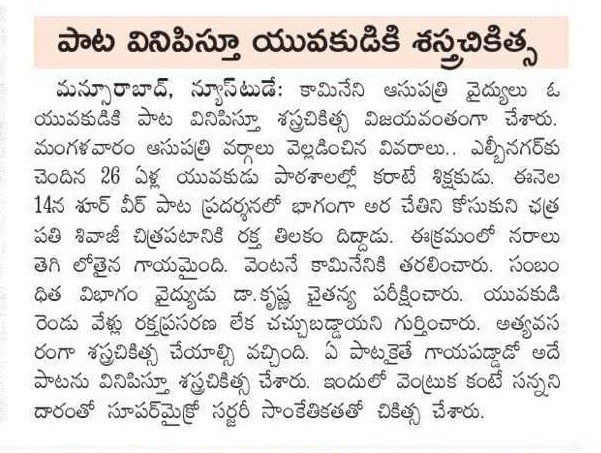




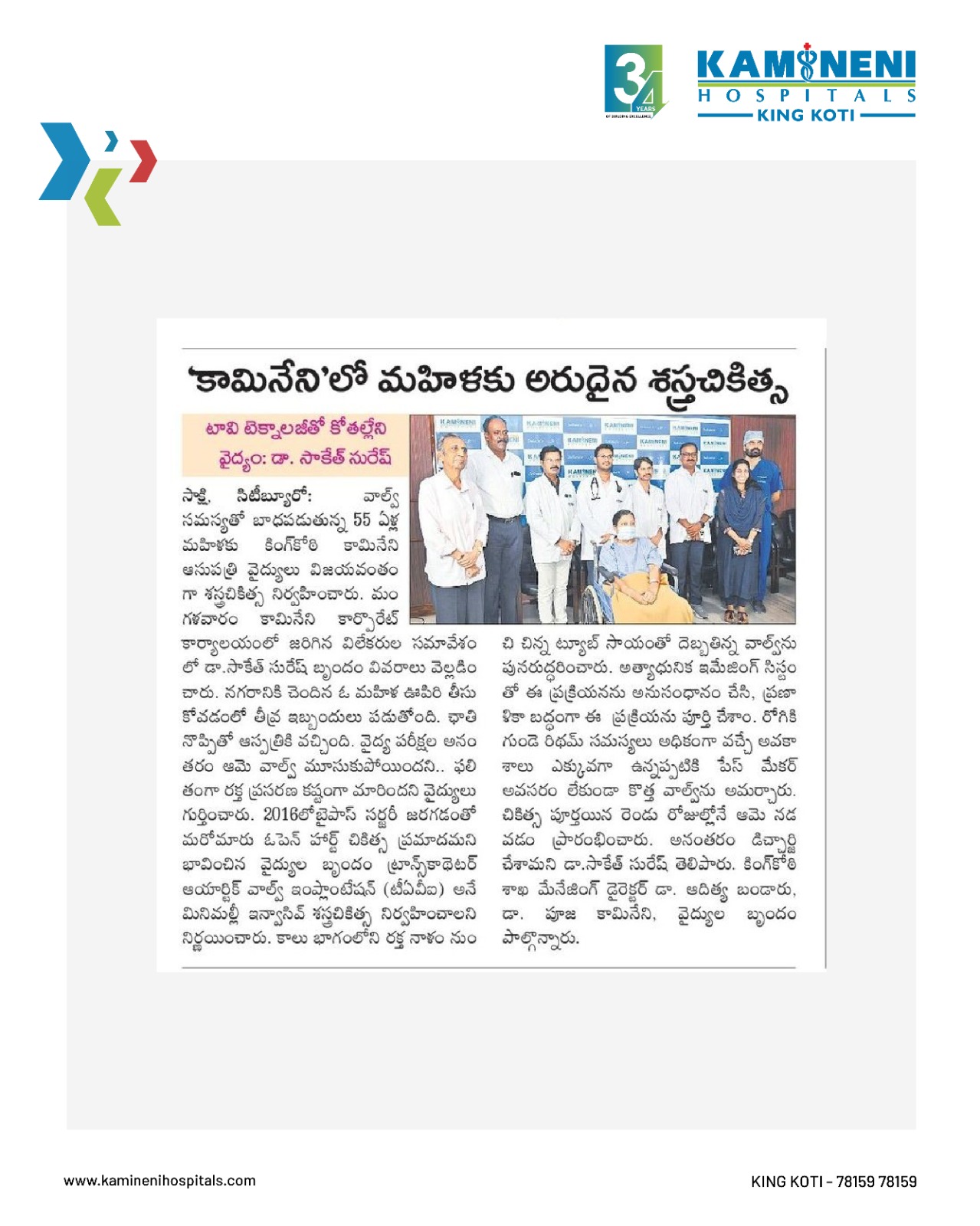
Successfully performed an advanced TAVI procedure on a complex post-bypass patient
This case highlights how contemporary TAVI strategies, precision imaging, and careful implantation techniques can safely expand


MBBS, MS (Ortho),
Consultant Orthopaedic Joint Replacement & Arthroscopic Surgeon





The knee joint can be damaged by arthritis, trauma, and other diseases. This can cause pain, stiffness, and swelling. With continuous wear and tear, the damage inside a joint can limit blood flow to the bone impairing the bone’s ability to regenerate. At this stage, a knee replacement surgery becomes necessary.
A TKR is performed by an orthopedic surgeon. The surgeon skillfully removes the diseased portions of the bone. He then shapes the joint to fit and place the knee implant. A knee implant can be made of metal, plastic, ceramic or a mix of such materials. There are numerous implants of varying quality, functioning and longevity. The choice of implant lies with the patient and the treating surgeon. A unilateral TKR surgery takes around 2 hours provided there are no unforeseen complications.
After Total Knee Replacement, the patient is monitored closely for a few days. Under the guidance of Kamineni Hospitals’ team of orthopedic physiotherapists, the patient undergoes multiple weeks of therapy to improve circulation, increase movement and strengthen muscles.
Every physiotherapy regimen is personalized and closely monitored by a team of experts to ensure comprehensive recovery.
The hip joint is one of the largest joints in the body. It is a ball and socket joint and can be damaged by arthritis, accidents or other conditions. This can cause pain, stiffness, impaired movement and swelling. With continuous wear and tear, the damaged joint can seriously impair mobility, causing unbearable pain while walking. At this stage, a hip replacement surgery becomes necessary.
A Total Hip Replacement is performed by an orthopedic surgeon. The surgeon removes the painful hip joint and replaces it with an artificial implant. The hip implant can be made of metal, plastic, ceramic or a mix of such materials. There are numerous implants of varying quality, functioning and longevity. The choice of implant lies with the patient and the treating surgeon.
After Total Hip Replacement, the patient is monitored closely for a few days. The patient may be confined to the bed and catheterized to reduce motion and help the new joint settle. The patient may be prohibited from twisting the leg for up to a year after hip replacement surgery. Physical therapy may begin after a day or two, at the discretion of the orthopedic surgeon.
Kamineni Hospitals provides multiple weeks of physical therapy to improve movement and strengthen muscles for patients recovering from Total Hip Replacement. Patients undergo personalized physical therapy under the guidance of skilled physiotherapists. Following successful physical rehabilitation, a patient can expect relief from pain and slowly regain ease at walking.
The Emergency Unit at Kamineni Hospitals is adept at managing various emergency situations in coordination with multiple departments, among which orthopedics is a key department. The unit, in coordination with the orthopedics team, is highly skilled at treating road and industrial accidents, severe injuries, fractures and dislocations among others.
It is equipped with the latest technology and supported by a highly skilled emergency response team comprising of specialist trauma physicians and trauma surgeons with a multi-disciplinary approach. The unit is given round the clock support by diagnostic services and a blood bank.
Kamineni Hospitals’ robust 24-hour emergency and trauma centre is constituted by:
This case highlights how contemporary TAVI strategies, precision imaging, and careful implantation techniques can safely expand


Copyright © 2023 All Rights Reserved | Kamineni Hospitals